

The following article was posted by GEMS, Informatics. Click here to visit their site.
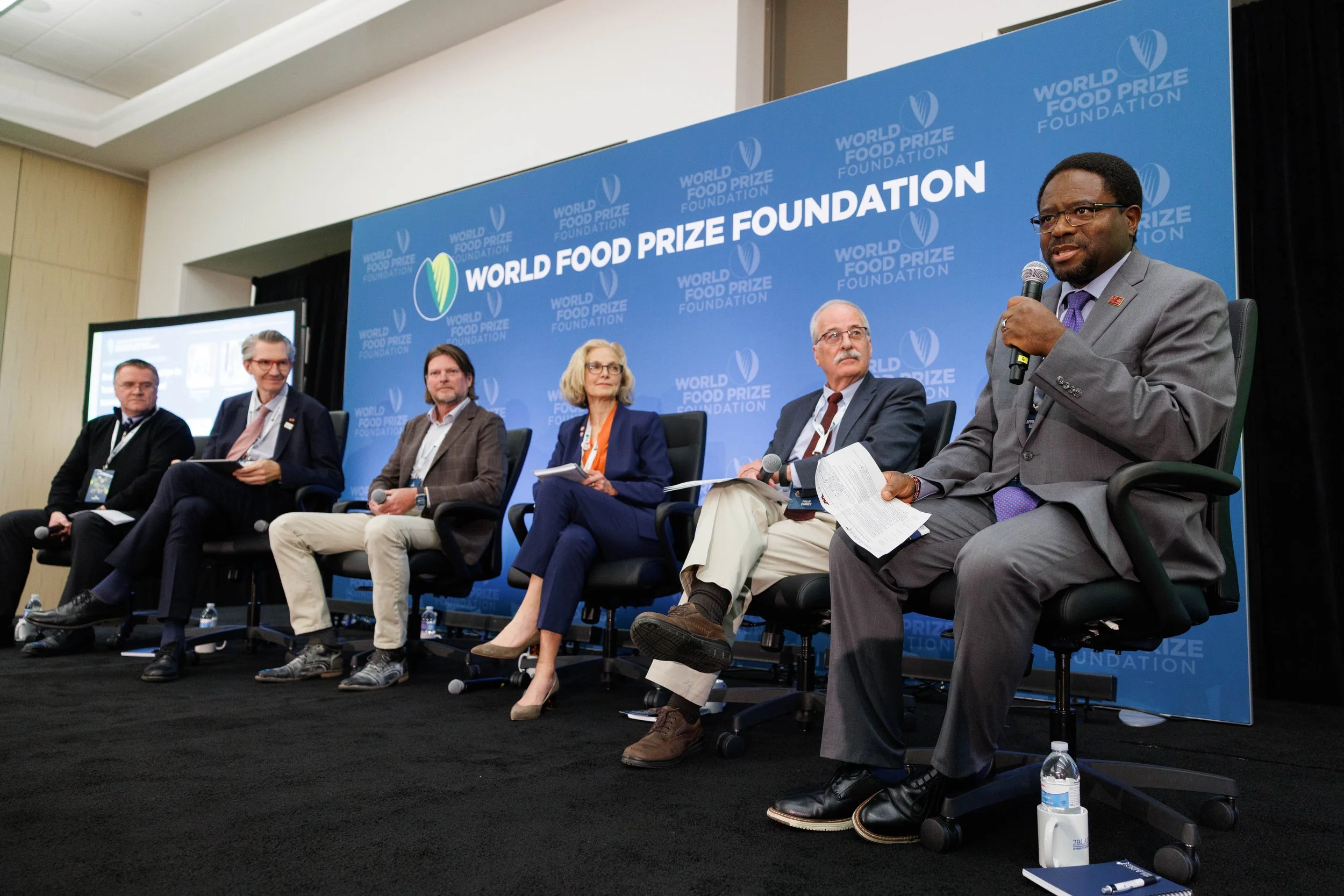
2025 World Food Prize: Panel Summary
The global agri-food system is under unprecedented pressure from climate change and shifting economic landscapes. At a recent panel during the 2025 Borlaug Dialogue, leaders from the public and private sectors converged on a singular truth: the traditional R&D model must evolve into a more integrated, mutual value-driven ecosystem. Read on for the speaker perspectives and short video clips of their discussion.
Speaker Perspectives: Bridging the Gap from Discovery to Impact
1. The Shifting Geography of R&D
Phil Pardey | University of Minnesota (GEMS Informatics) Phil highlights a "seismic shift" in global agri-food R&D spending: middle-income countries now account for half of the world's agri-food R&D and the private sector role is becoming more prominent. However, low-income countries are being left behind, spending less than $1 on agri-food R&D for every $100 spent by the rest of the world. Phil calls for innovating the way we innovate and the benefits of partnerships where data and analytical tools are created and made accessible in IP- and market-aware ways that incentivize public and private investment while maintaining competitive value.
2. Beyond Core Crops: Cooperation & Community
Ty Vaughn | Bayer Crop Science Ty outlines Bayer’s "three-pronged" approach: Collaboration (working with groups like 2Blades), Cooperation (providing free IP and sequencing for crops like TR4-resistant bananas), and Market Enablement. He highlights a new $32M facility in Zambia that doesn't just process corn—it trains local workers and attracts secondary investments from partners like John Deere and Mastercard.
3. Purposefully Derisking Change
Ian Puddephat | PepsiCo Ian argues a resilient supply chain is impossible without a resilient farming community. He emphasizes that the real bottleneck isn’t just a lack of technology, but the transfer of knowledge required to apply it. He argues that the key to adoption is making change "easy" by sharing the journey of de-risking new technologies across the entire value chain.
4. Aligning Research with Actual Market Needs
Juan Lucas Restrepo | Alliance of Bioversity International and CIAT Juan Lucas discusses market-responsible collaboration, arguing for a sharper “ideation-to-deployment’ continuum where scientists develop solutions firmly rooted in actual market needs, in addition to looking at "market pulls” such as shifting consumer habits or public policies to create a complementary dynamic between research in the public and private sector, especially in the pre-competitive parts of the agri-food value chains.
5. Bridging Gaps Through Aligned Interests
Diana Horvath | 2Blades Diana highlights that effective partnerships aren't just about "doing good"—they are about aligning incentive structures to create a win-win for everyone involved. By acknowledging that the private sector requires a return on investment while the public sector seeks social impact, 2Blades acts as a translational bridge. They facilitate models where private partners gain exclusive rights in their core markets while "carving out" and reserving those same technological benefits for smallholders in non-competing geographies. This "enlightened self-interest" ensures that every partner remains fully vested in the success of the project.
To hear more from these leaders in the Agri-food space, watch the entire panel discussion.