

Scientists Uncover How Plant Immune Receptors Stay Active Under Heat Stress
As heat waves become more frequent, crops are increasingly losing their natural ability to fight disease. A new study now explains why this happens and shows how this knowledge can be used to build more climate-resilient disease resistance.
An international team of scientists has identified the mechanism that allows a key class of plant immune receptors, known as NLRs (nucleotide-binding leucine-rich repeat proteins), to remain active at elevated temperatures. Their findings provide a roadmap for designing crops that can defend themselves even under heat stress.
You can read the pre-print of the study here.
Why heat weakens plant immunity
NLR proteins are central to plant defence. They act as internal sensors that detect invading pathogens and then assemble into larger protein complexes, called resistosomes, that trigger immune responses. However, many well-known resistance genes stop working as temperatures rise, leaving plants vulnerable to disease.
“This is really a structural problem,” explained Marta Grech-Baran, a leading author of the study. “Even at higher temperatures, these immune proteins can still recognize invading pathogens. The disruption occurs at a later stage when high temperatures interfere with the proteins assembling into effective immune complexes.”
Grech-Baran went on the explain that some complexes may still form, but too few, or in a non-functional way, to trigger a proper defence response. As a result, the plant is left vulnerable to infection. “Once this became clear, the solution was straightforward; the proteins need to be stabilized so they keep their proper shape and can assemble into immune complexes even under heat stress.”
A structural switch for heat tolerance
Using a combination of biochemical assays, plant infection experiments, and structural modeling, the researchers discovered that temperature tolerance depends on how well different parts of the NLR protein support each other. If this internal structure becomes unstable at high temperatures, the immune complex cannot form properly.
The team identified specific structural features that determine whether an immune receptor remains stable and functional when temperatures rise.
Predicting and engineering resilient immune receptors
Based on these insights, the researchers developed clear structural rules that can be used to predict whether an NLR is likely to be heat tolerant. When applied across dozens of known immune receptors, the approach accurately distinguished those that remain active at high temperatures from those that lose function.
Crucially, the scientists also showed that temperature sensitivity can be reversed. By introducing small, targeted changes that strengthen protein stability, they converted a heat-sensitive immune receptor into one that remains functional at elevated temperatures.
“This is what makes the discovery so powerful,” said Kamil Witek, 2Blades Group Leader and co-author of the study. “Once we understood where the problem lies, we could fix it directly. Small, precise changes to these immune proteins can make the difference between resistance failing and resistance holding strong under heat. It opens the door to designing disease-resistance genes that are built to withstand future climates.”
“This is what makes the discovery so powerful... It opens the door to designing disease-resistance genes that are built to withstand future climates.”
Implications for global agriculture
Together, these findings provide the first unified, mechanistic explanation for why plant immune receptors often lose effectiveness at higher temperatures. More importantly, they offer a practical strategy for developing disease resistance that works reliably under heat stress.
By using structural knowledge to guide gene design, breeders and biotechnologists can now aim to future-proof crop immunity, helping protect yields and food security as global temperatures continue to rise.
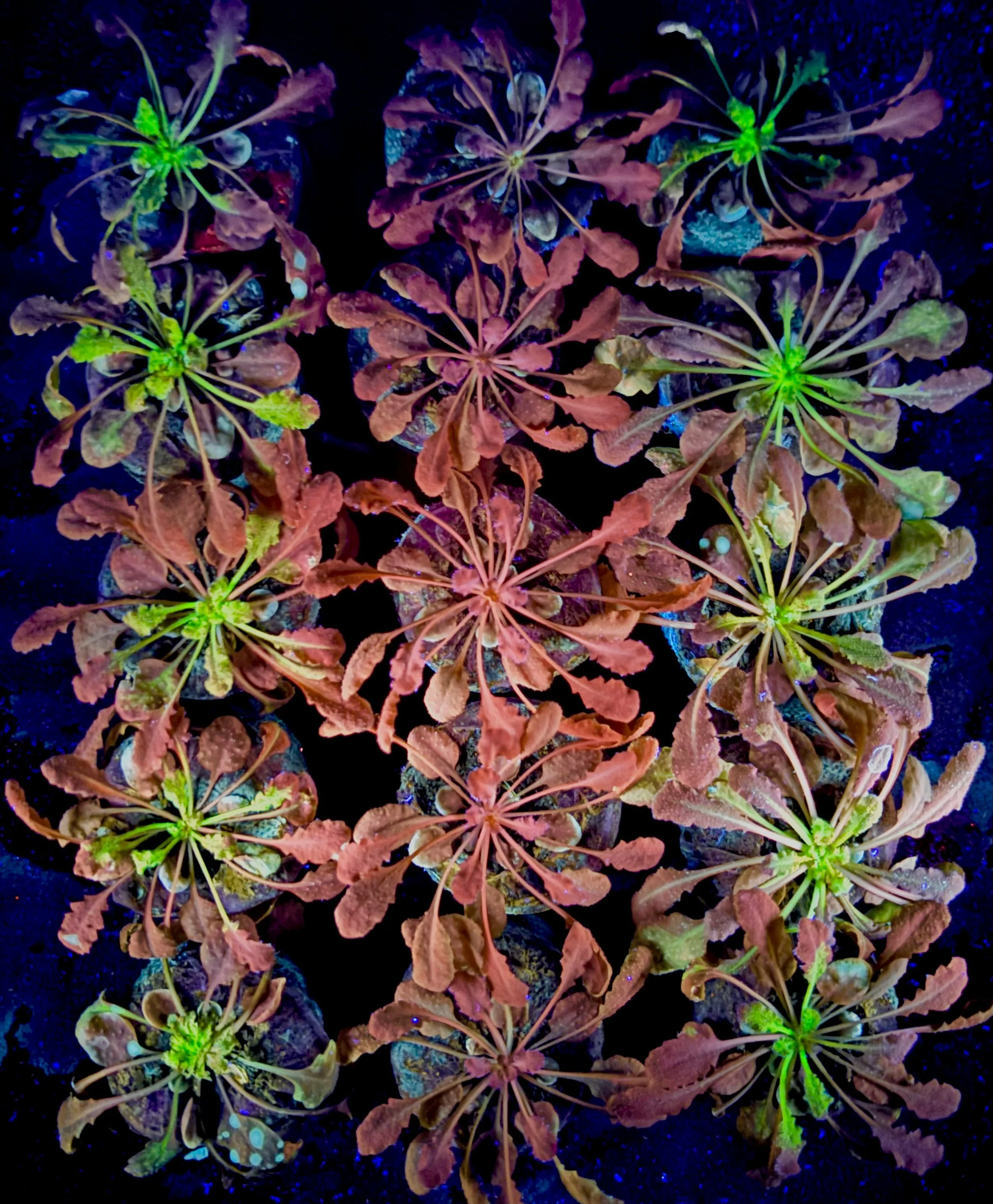
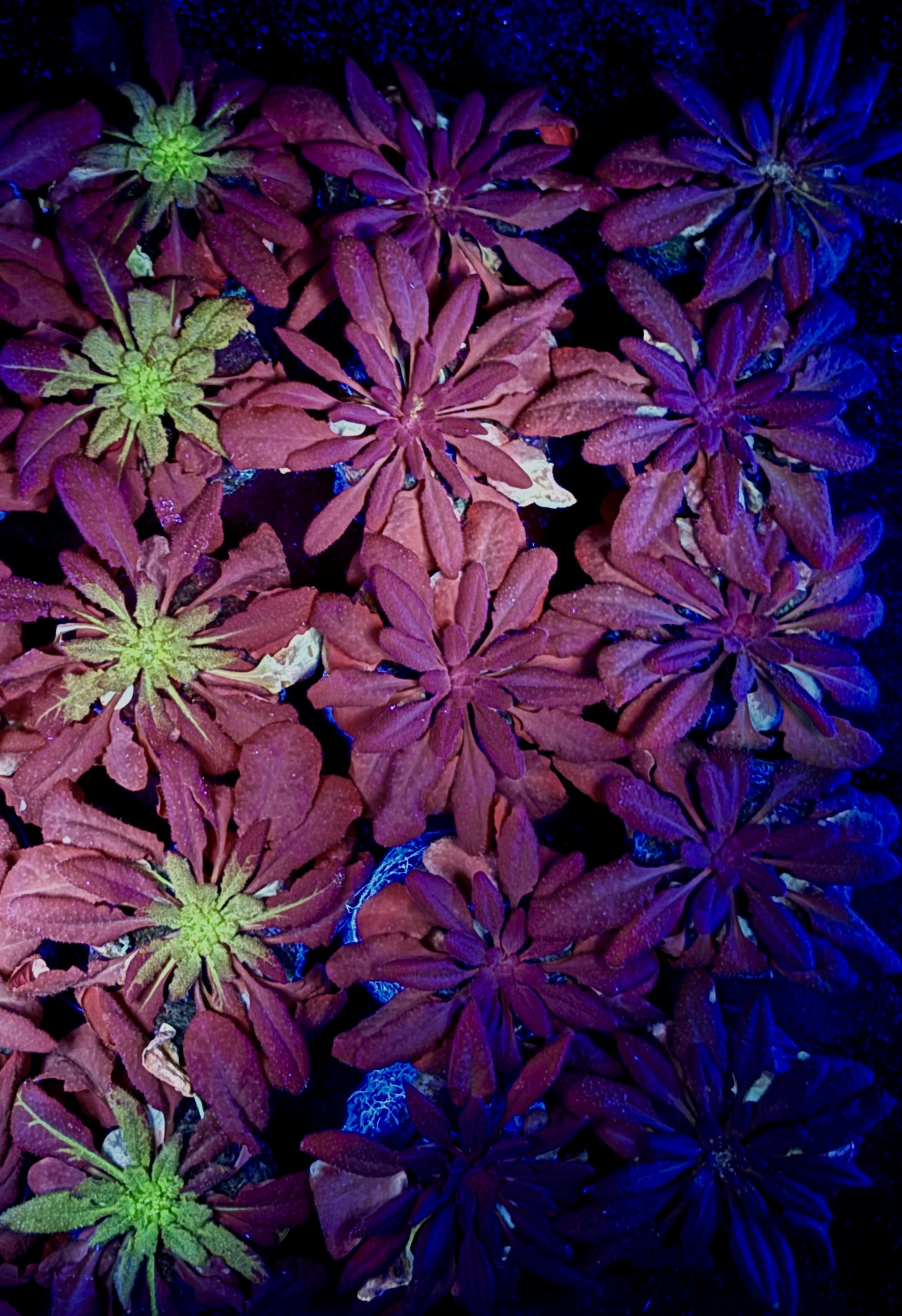
Images: Arabidopsis control plants and plants expressing Rysto or an inactive Rysto variant infected with a fluorescently-labeled TuMV virus (an infectious clone used for visualizing viral movements). Plants were grown at elevated temperatures, and virus spread was observed by green fluorescence fourteen (14) days after infection.