

Spotlight Series: Nico Champouret
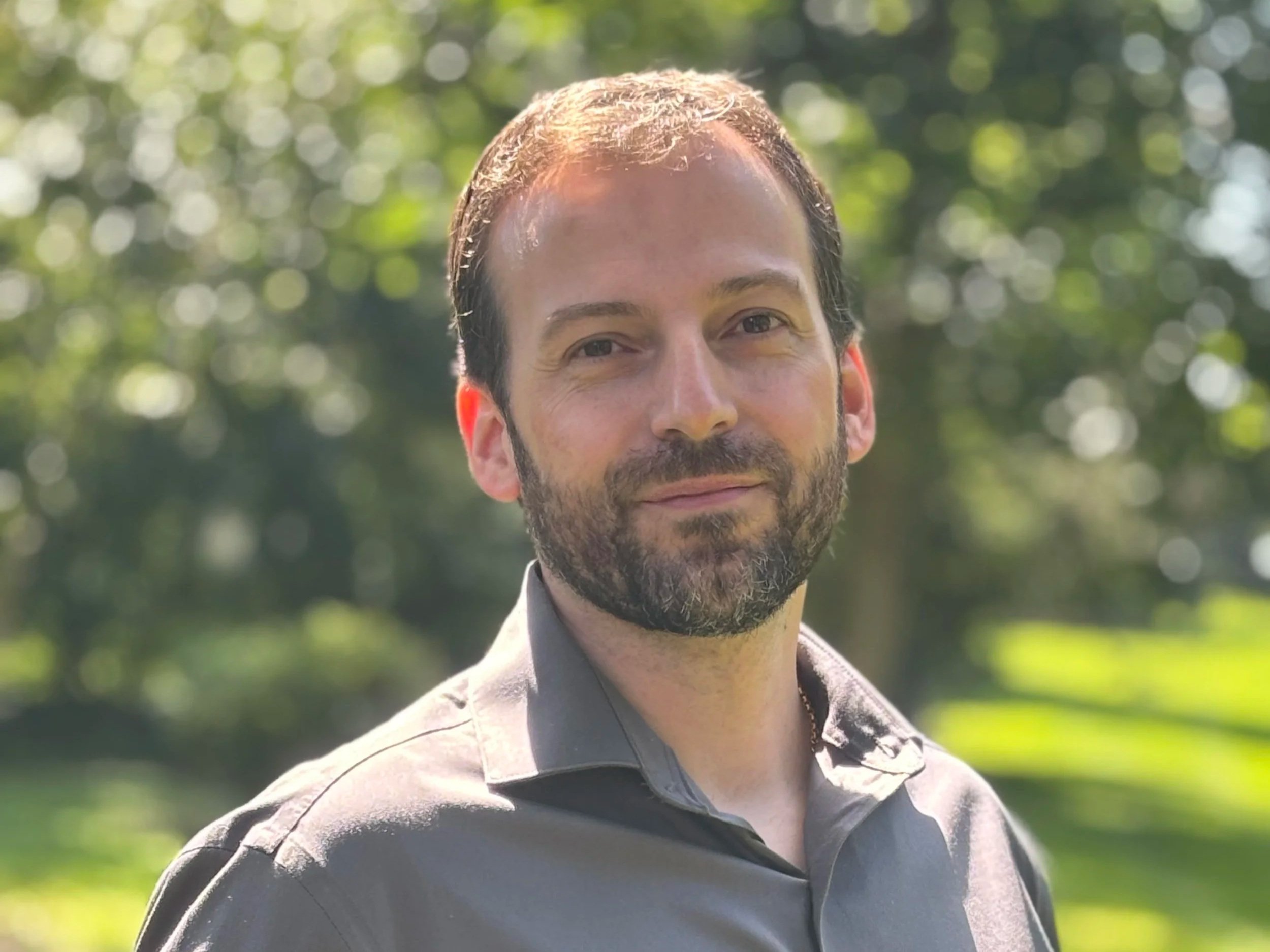
From discovery to impact: pursuing a plant science career in the private sector
Nicolas “Nico” Champouret has built a career spanning academic research, biotechnology, crop protection, plant breeding, and global R&D leadership. A former 2Blades scientist at The Sainsbury Laboratory, he has worked with food crops and flowers and in foundations, family-owned businesses, corporations, and cooperatives. Throughout that journey, one motivation has remained constant: using science to develop products that create value for growers.
What first drew you to plant science and biotechnology?
Through the studies back in France when I started after high school, through the university, I went in biology, in general biology—plant and animals, mainly cell biology and physiology. I started to get a greater interest through the plant science. And what drove me there was really all the biotechnology behind it.
And so that's why the first year of the master was plant biotech and the second year was fungal biotech. The other reason behind it is in the family, through my dad’s family, we still have farms, and that connection to plants was there since childhood.
Every time I could enjoy going there, what I enjoyed the most was first the rewards for the hard work, because you wake up early, finish late, and it's a journey every day.
But you always, all day long, keep solving problems that come forward. And the reward is to see, from planting to harvesting, what you collect at the end. And you can share and put it on the table. And so this is really the part that I enjoyed a lot.
When I came to the university, I was really full into the biotech. Also, at the end of the university, after all the GM and all the transformation track I was going into, staying in France was very limited. And that is also why I decided to leave the country and continue my passion into biotech—pushing the boundaries and the creations, going quicker. That's really what I enjoyed: pushing the boundary and discovering things.
How did your early research experiences shape the direction of your career?
My masters was unique in France, as it was a masters with a connection to industry.
So I was already there thinking, do I go academic or do I go industry? I went into academia. I worked as a pre-doc with the Kamoun Lab in Ohio, loved it, learned a lot on the pathogen, then moved back to Europe, started the first PhD in Basel, still staying on the pathogen, and then moved to Wageningen to do my PhD in plant breeding.
My PhD in Wageningen was very applied. The work we were doing was for sure fundamental in some aspects, but we were financed by a cooperative of Dutch growers. Therefore, every six months I had to present the academic output for publication and the business output, because some growers behind it wanted to know their return on investment.
And that was really, for me, the click. That was really where I was like, okay, I will move forward to use the science to develop product. That's really where it started.
You also learned early that scientific success does not guarantee that a product will reach the market.
It was the early days of transgenics. We were the first group to make a cisgenic potato, working with the industry, finding resistant genes to put in those potatoes.
Then I’ve seen with my own eyes, at the time in the late 2000s, tons and tons of cisgenic potatoes that were ready to hit the market, but the market was not ready.
All that product was destroyed, and I admit, it broke my heart at the time. I promised myself when I left my PhD to never work again on potato, and I learned the importance of knowing your market.
The key behind it is: do you have a market? For me, it really is that connection to food security, sustainability, improving farmers' lives and incomes that was already there in all that we were doing.
What brought you to 2Blades?
I was starting to look at what I wanted to do next. It was interesting because the first idea was to go straight into industry. Then it became, you know what, let's try the in-between and see what is out there. And 2Blades came.
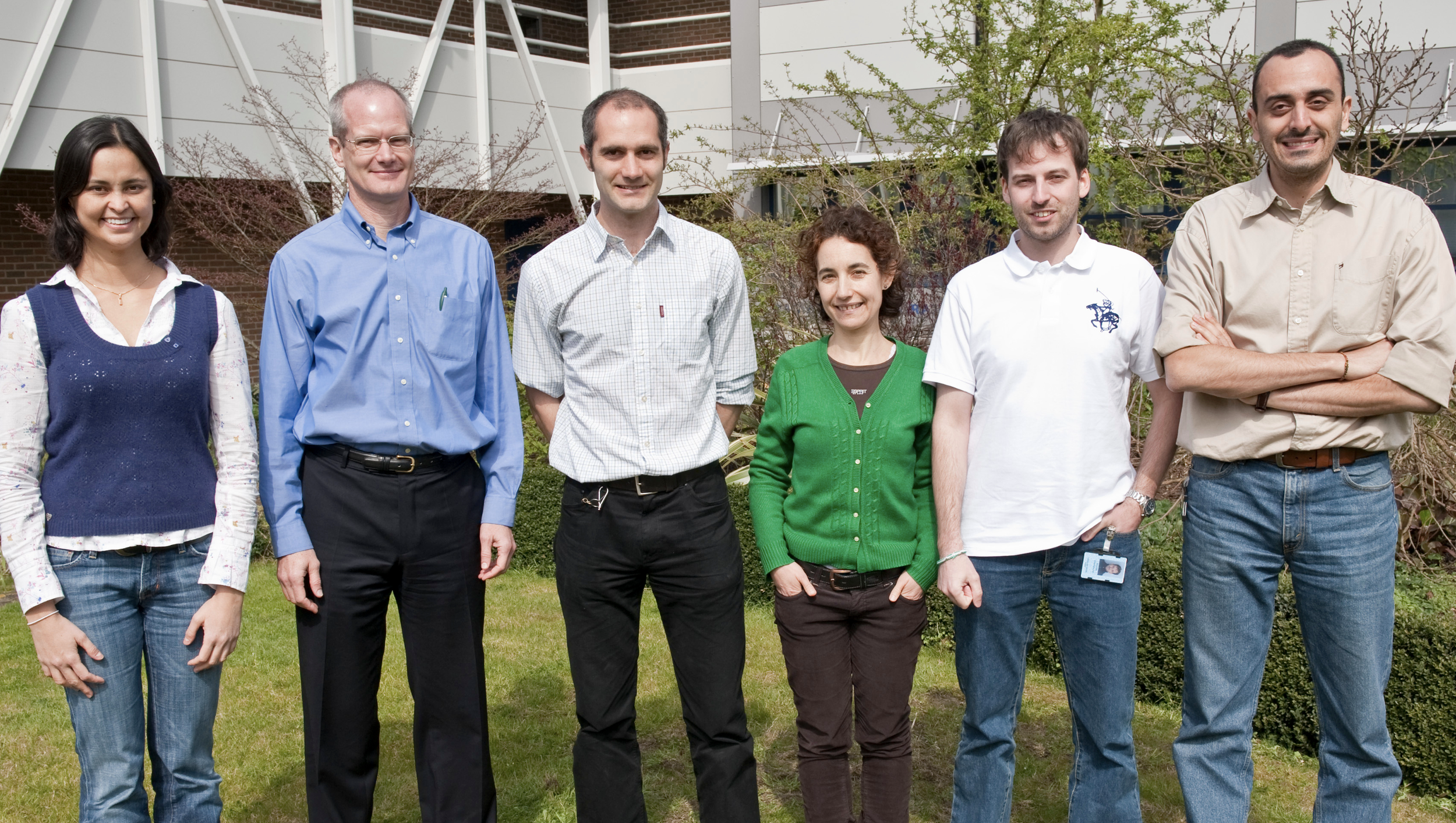
Nico, 2nd from right, and 2Blades Group at TSL circa 2009. (Left to right, Cintia Kawashima, Eric Ward, Brande Wulff, Inma Hernandez-Pinzon, Nico Champouret, and Costas Bouyioukos)
I still remember my interview in Norwich with Eric Ward (then 2Blades’ President and Group Leader of the 2Blades Group) and lab member Brande Wulff. I said with all that I have learned on those potatoes, I want to do something with it—not on potatoes. And that's when that opportunity of the postdoc with the wheat stem rust resistance came.
What drove me into it was, again, the angle of biotech, developing a product for a purpose. And the purpose was farmer food security. It was linked again. It was a different crop, and that was also one of the drivers.
What was distinctive about the experience?
One of the things with 2Blades that I was interested in and unique to 2Blades is the entrepreneurial mindset: developing a product for a purpose and supporting farmers—small, local, big grower, doesn't matter. It's not the exact market; it's having an impact.
And where it's placed, in the middle of The Sainsbury Laboratory (TSL), that experience at TSL was actually super important for me—the way you learn to function in that environment, how you challenge yourself all the time, how you progress fast.
That's the beauty of 2Blades. It really keeps you sharp. You develop products, but in a very sharp academic environment.
What was important with 2Blades was that connection to deliver value to agriculture. Actually, it was a reason why I moved to Simplot after, because then you can work at full industry level.
Working for 2Blades was really instrumental at that stage for me in my career.
After promising yourself that you would never work on potatoes again, what convinced you to return to them?
One driver of moving to Simplot was actually going back to potato. As I said, I promised myself never to do it again. But I went back to potato.
What convinced me was their vision—the vision they put on the table and how determined they were to deliver product, GM potato product, to solve growers’ problems. The dedication was 100%, so the excitement for me there was 100%.
What was the greatest change in moving from academia into industry?
The challenge for me was more the transition from academia to business.
In academia, your success is often measured by your scientific discovery. This is what you are labeled for. In industry, it's measured by the ability to turn a discovery into a product. And not just a product—and there are two words that still, as of today, resonate in what I do—products that create value.
They create value for a customer, for the business, and the customer can be many different types of customers. They can be internal or external, but it needs to create value.
For me, the biggest challenge when people don't know if they want to go into academia or industry is this. They need to decide: do they want to be recognized by their scientific discovery or by their ability to translate discovery into products that create value?
Creating value is a driver. For me, it has always been. That's what I realized at Simplot: using the science to make product and see those products on the market. That's what drives me.
What does it feel like to see a product you helped develop reach the market?
I still follow the varieties on the market that I put my hands on. And those are the proud moments. It's crazy to feel so attached to it. It's something you created, products you are proud to help develop.
You have a pride behind them in the sense that that's something people can enjoy every day that you are part of. Those products require tons of people and a lot of work, but you can say, yeah, I was part of it.
One product I like to track is from the White Russet varieties. It's one of the GM potato varieties that is on the American market and has a full package of late blight resistance, bruising browning and asparagine reduction, and improved cold-storage quality.
“For me, the biggest challenge when people don’t know if they want to go into academia or industry is this: they need to decide - do they want to be recognized by their scientific discovery or by their ability to translate discovery into products that create value?”
And that potato, I saw it grown and selected in a petri dish. It's not just because of that; it's because it was years of work in the lab, in the greenhouse, in the field, collecting the data with the team, challenging the data, comparing the performance of each variety, and landing on that one.
Nobody, when they go to the supermarket, realizes the amount of work behind it. But for me, yes, the pride is to know the amount of work behind it. It is years, years of work, from ideation to creation. It's a dedication. And often people don't see that when the products are on the shelf.
Why did you move from food crops into the flower industry?
I wanted to keep growing, so I needed to change from being a technical leader to move to an organizational leader. And I needed to broaden my horizon and perspective, and what better than to move into flowers?
Hundreds of crops. Tons of different genetics, tons of different ploidy levels, tons of different pathogens, and an incredible amount of different market segments.
And so those were the main drivers that moved me to Ball Horticultural and then to Syngenta Flowers and the flower industry. I suddenly broadened from my pathology angle to leading a team in genomics, bioinformatics, plant pathology, breeding support, analytical services—plenty of different departments—and enjoyed it.
That was really the next stage for me and very different ways of working, because you end up not leading specialists, but slowly moving to leading leaders.
The flower industry is such a different industry. It's heart-driven. It's all on the emotion. The holy grail trait for flowers is actually color—the stability of the color and the unusual color that they don't have.
You have the basics. You need your blue, white, red, because it's in many flags in the world. So you can use it on many national days. But out of that, purple and yellow are also colors of very big importance depending on the markets. Orange.
Market dynamics you also need to be aware of when you go into industry. Markets change, fashion changes. The pink Barbie color—after the Barbie movie, everybody wanted it. It takes time to develop those varieties. By the time some were ready, it was not in fashion anymore!
What is the focus of your role now?
At Limagrain Vegetable Seeds, I work in an international environment serving diverse vegetable-production systems and grower needs.
For me, this role is a stretching opportunity, because now I lead in a large, international R&D environment across vegetable crops and segments..
It's a lot of governance. It's leading leaders of leaders. It's extraordinarily strategic nowadays at my level, because we work on a lot of different initiatives for the business.
In this role, it's a lot of building teams, aligning diverse groups around common visions, creating an environment where innovation can thrive. Without innovation, R&D is loosing its purpose.
The grower in our case defines what products they need. Then you can use all your creativity and innovation and knowledge of science to get there the quickest, with the right return on investment.
We have to be practical, pragmatic. We work to deliver for growers all around the planet and in a lot of different markets.
What challenges are becoming most important to growers?
Across the seed industry, biotic resilience has always been a priority after yield, today heat, drought, and broader abiotic-stress resilience are increasingly important areas of research.
Everybody sees this as a key for the future.
What is it like to move into a Head of R&D role?
What drives me is supporting and developing international R&D teams to work effectively together so that scientific innovation can translate into valuable products for growers
That doesn't change, but it's more at which level can you make, or can you have, influence to make that acceleration?
The skills—a lot of vision and communication—are totally different. Are you using the right wording, the ones that bring people together, where they recognize themselves in it?
And so these are different skills. At the same time, you need to keep your touch with innovation and the science and the technology.
I love it. It's always, as I say, the next challenge for me to understand.
The experience of working in different structures—of foundations with 2Blades, a family-owned company, a corporate company, and a cooperative now—I love it because we still all have the same customers, but we all use different business models to get there.
What do you enjoy doing outside of work?
You need balance. If not, you crack under pressure.
I spend a lot of time with my family. We have three nationalities at home, three languages are spoken, and we have lived in five countries over the last 21 years.
We like to visit places. We like to go to the mountains, to the sea. We like to go hiking. We love to visit castles and museums and learn about history. We like to go fishing with my daughter, but I admit the last few years I've been a little busy and she's growing up.
I have one small side pleasure—geocaching. Every time I go to a place and I have an opportunity and there is a cache somewhere, I like to go. It makes me discover new places.
Looking back, what influence did 2Blades have on you?
The experience at 2Blades was key, and I still remember Eric for being an incredible boss. He is, for me, a model that I always keep in mind in my day-to-day work.
2Blades had a huge impact—that experience of 2Blades and TSL as both push you think beyond the existing boundaries of science. Those places teach you resilience as no other places did in my career.
I still present every year with the TSL master’s student group. I connect with them for an hour when we talk about my career path.
It's very important for me that students don't think that the only output of going into science and plant science is to be a professor. There are plenty of other opportunities out there.