

A Conversation About Purpose
Soybean rust can devastate harvests and threaten farmers’ livelihoods. Since 2007, 2Blades has worked to develop durable resistance to this destructive disease, initially focusing on South America, where soybean is a major crop.
In 2023, 2Blades launched a parallel program in Africa, where soybean production is growing rapidly, particularly among smallholder farmers. This effort brings together experts from the International Institute of Tropical Agriculture (IITA)—soybean breeder Dr. Godfree Chigeza and plant pathologist Dr. Harun Murithi—and University of Illinois soybean breeder Professor Brian Diers. Related work is also in progress by students Habtamnesh Girma Habtameriam and Faith Sunguti.
In this interview, James Houghton, research technician, and Dr. Everton Capote-Ferreira, postdoctoral scientist, take us behind the scenes at 2Blades and share how work on an international collaboration to advance rust-resistant soybeans for African smallholders helps fulfill a fundamental desire to produce meaningful change through science.
What are the aims of 2Blades’ project on African soybean rust resistance? What are your roles in it?
Everton: Our mission in this project is to deliver durable, long-lasting resistance to soybean rust for smallholders in Africa. The first stage was to evaluate what conventional rust resistance was present in the IITA cultivars together with our knowledge of different races of the pathogen. I came with a strong background in plant breeding and molecular breeding for soybean disease and genomics. Using SNP markers, we were able to distinguish which native soybean resistance genes are present in each soybean line, which genes are still working and which are ineffective against African isolates of the pathogen.
For the longest-lasting efficacy, ideally we would like to use different methods - conventional breeding, transgenics, and/or gene editing, but because of regulatory rules for some of those technologies, we are focusing here on traditional breeding. Our main goal is to solve the problem with the most effective method. We are now in the second phase of the project, in which our collaborator Brian Diers is using conventional breeding to bring these native resistance genes into a single cultivar. Combining them will help the genes to work together and increase the difficulty for the pathogen to evolve.
James: We received the African soy seeds in the UK, and I needed to see what we had to work with, make sure that all the seeds we received were good, healthy seeds, how many we had, etc. What was different was the scale of this project, the number of plants we were working with. I needed to make a plan for how we could sow hundreds of these seeds in limited space, while getting as high throughput as we could and working out how to grow soy in a country that was not native for it.
How does the African soybean rust resistance collaboration work?
Everton: This project has been a good example of how we can win with good planning and a good project and partners. We can deliver fast and precise solutions in a short period of time in a very challenged environment - plant breeding - that we know can take ages. The critical contribution of our African collaborators has focused around their on-going breeding program. The work done by Godfree was fundamental. He has been breeding for soybean rust resistance in Zambia and has been on the front lines for developing resistant cultivars. He provided us with a big collection of IITA seeds that he has been developing over the years.
Harun, with his plant pathology expertise and knowledge, provided the African isolates for the project. If you want to solve the problem of soybean rust in Africa, you need to know the rust populations there.
IITA didn't know which native resistance genes they had in their lines, and they didn't know more precisely about the virulence profile of the pathogen races. We contributed this part, and the information we produced is already helping their resistance breeding strategy in phase II.
James: The materials IITA gave us were incredibly valuable for this project to move ahead, but in the bigger perspective these materials are just a snapshot in time. The communication and the relationship we've built with IITA during this project is vital for the future. Together we can monitor soybean rust isolates and plan ongoing solutions to secure the future of sustainable soybean production.
2Blades operates on a “dual market” model, developing resilient crops for commercial and smallholder agriculture. How does that work?
Everton: Working with big companies helps us to develop discoveries and translate basic research into applied research. We benefit from the fact that companies are very sharp in what they want to deliver. We can develop a lot of expertise in terms of molecular plant pathology, breeding, and business decisions as well. Then we can put all of this together in a big basket and use it to help small holders in Africa. We help agriculture at all scales from small holders to big farmers. We are set up to help advance technology and science for agriculture in a worldwide context.
James: 2Blades has been around for 22 years as a non-profit organisation. We benefit from our private sector collaborations that focus and fund our research, and seed companies benefit from 2Blades. It’s always included in the contracts we have with industry partners that we have the rights to use what we find for smallholders in Africa. In this way, we are benefiting the global seed industry and the public as well. Seed companies are the ones who take products forward, so by working with industry we better deliver our products to everyone. It is the best of both worlds.
In what ways does this project and working at 2Blades fit with your career interests?
James: When I first joined 2Blades, I didn't know anything about plant science at all. I liked gardening growing up as a personal thing, and later I liked engineering. I did a 3D design course at college, and, in university, I studied chemistry because throughout my childhood, I just enjoyed science. After I'd graduated, the job at 2Blades as a technician came up and it just slotted all my interests into place as a fused field, which is plant science. And I just, I love it, basically. It's a combination of everything that I'm interested in and like doing.
This project has been a great learning curve for me in terms of just all of the advanced molecular techniques, etc., which I knew nothing about. Everton was very good at providing all of this knowledge and expertise, so I just want to thank Everton personally for taking me through this.
Everton: Thank you! You also helped me a lot. You, Georgios (Papaioannou - a masters student who participated in the project), Harun, Godfree, Brian and 2Blades management made sure everything was in place. It was a big team effort.
During my PhD, I was working on a different major soybean disease in Brazil and using similar approaches to help soybean breeding programs in Brazil. Moving to 2Blades, I was extremely satisfied to be able to apply this early experience and knowledge to help other plant breeding programs - in this case, soybean rust in Africa.
2Blades shaped my knowledge and expertise to carry out this project, especially molecular cloning, genotyping approaches, and molecular plant-microbe interactions in general. This project helped me a lot to gain experience in leadership and project management, managing people and expectations and work in an internationally diverse group of scientists at 2Blades and with our collaborations. It helped me a lot in my soft skills and leadership point of view.
“At the end of the day, what any scientist wants is to make a change in the world.”
What is it like to apply your scientific expertise to a real-world agriculture challenge affecting smallholder farmers?
James: If you're delivering an outcome with the added bonus of helping people, that is an incentive to keep going; you're more enthusiastic about doing the job and doing the job well.
Like with all projects, the African soybean rust project has got that sense of … what is it? … wonder and investigation. I think every scientist is looking for the answer to the questions, of ‘what, why, and how’. But because there is an added incentive of helping smallholders for the greater good, it's that extra ‘why’ as well.
An example of a current real-world challenge closer to home in the UK is this drought we've been having, causing yield losses for all the farmers in the UK. They're having to use winter supplies to feed their cattle, and we're going to have a food shortage in the wintertime. Prices are going to go up. Shops are probably going to have much less food available on the shelves. Climate is constantly changing. We scientists and breeders need to keep working to adapt all crops for the future.
Everton: In the 2Blades Group at The Sainsbury Laboratory, we are in an environment where we are around a lot of breakthrough technologies and science, new discoveries being found every week or two, but in this project we have been focused on helping small holders in a fast, effective way. Applying our expertise in this way was extremely satisfying on a professional and personal level.
How would project success change circumstances for a smallholder farmer?
Everton: We know that the incidence of soybean rust in Malawi, for example, causes 60-70% of yield loss from this one pathogen, soybean rust. With soybean rust resistant cultivars, that scenario would not be a common situation anymore. We want to eradicate yield loss, the kind of extreme loss they have been experiencing. Success for this project is the eradication of the fear of smallholders in Africa to grow soy because of soybean rust. With success, they would not have to fear losing their yield, their production, their food because of soybean rust.
James: With food insecurity, there's a constant worry of whether there is going to be enough food. Soybean rust resistance would hopefully ease the worry for them, knowing that they can continue their daily lives without the worry of having to find food.
Describe walking through a farmer’s field in Malawi some day, where they are growing rust-resistant soybeans that you helped to produce.
James: You see no disease infection and you know that what you have done has truly been impactful. You're walking through the fields in the morning as the sun's rising, just pure, pure green and healthy, healthy plants. You know that everything's going to be fine; you've got a high yielding crop.
The farming community definitely has a sense of family, so the benefit will not be just one farmer, it's all the farmers together. They can convene around their fields and enjoy the fruits of their labor, truly seeing that their future is bright.
Everton: The day I see soybean rust-resistant soybeans in a farmer’s field will be one of those great memorable days that you're going to always remember forever in your life. And you're going to tell your grandkids or your parents and your friends how you helped to change something in the world.
I think the feeling will be like this mix of emotion of that working hard but right, with the right people and the right organization, leads to something fruitful that changed the world. And I think a mix of happiness, enthusiasm, and gratitude will come to my heart. I imagine this day will be like a beautiful blue-sky day with beautiful soybean leaves moving through the wind. And this wind will not have any spores, no soybean rust spores flying around!
I will feel gratitude to be alive and to play a role in this life journey. At the end of the day, what any scientist wants is to make a change in the world.
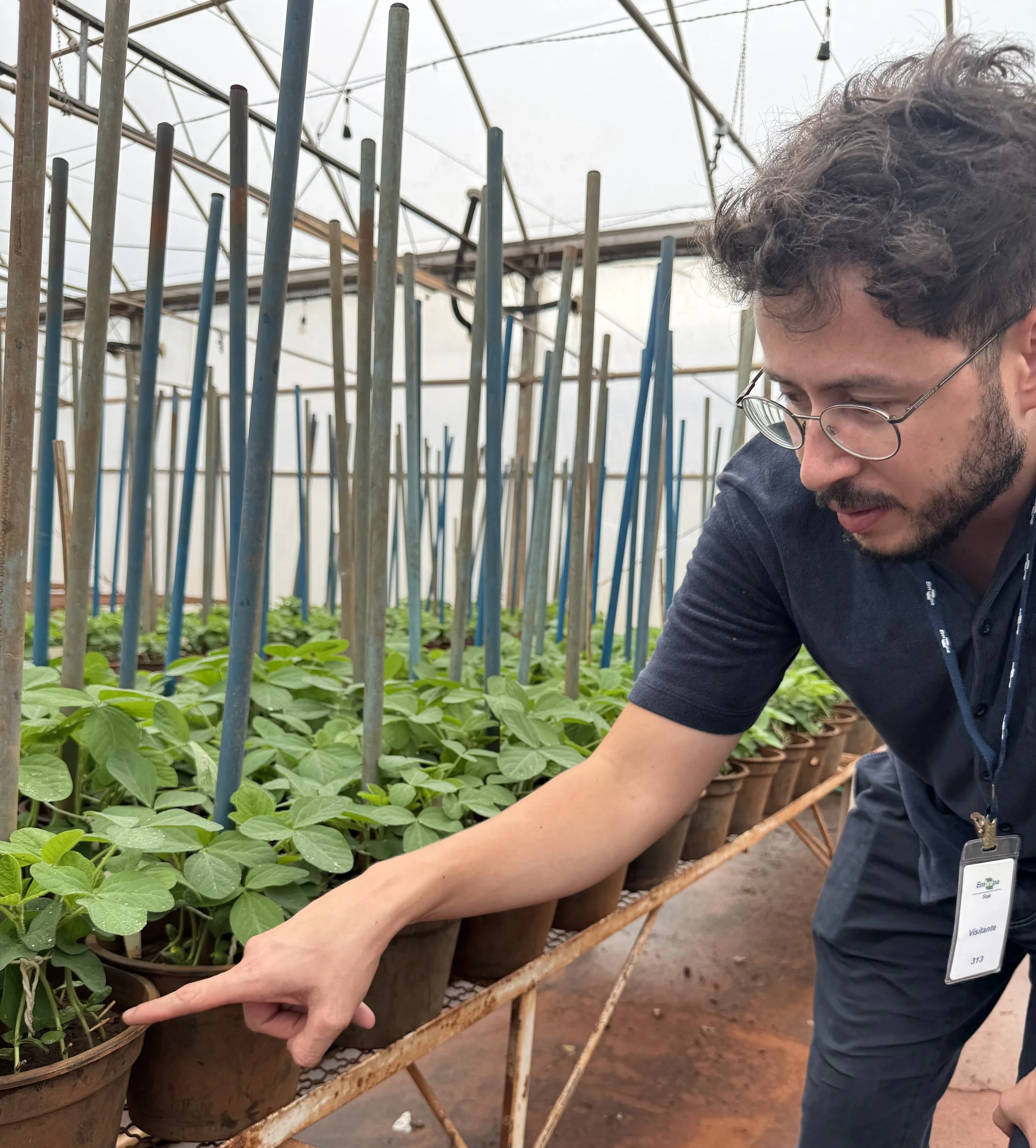
Everton Capote-Ferreira examines soybean plants
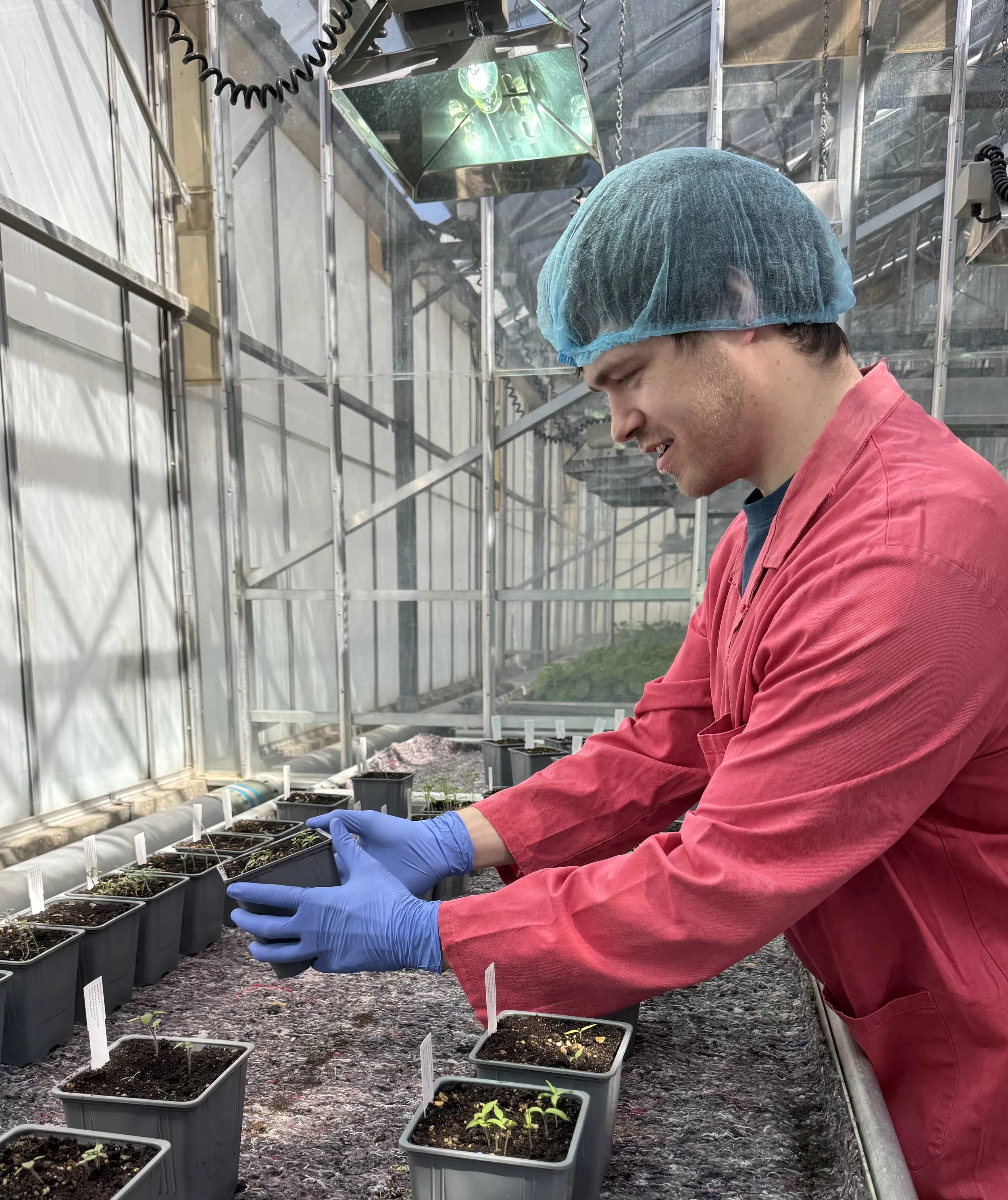
James Houghton caring for plants in the glasshouse
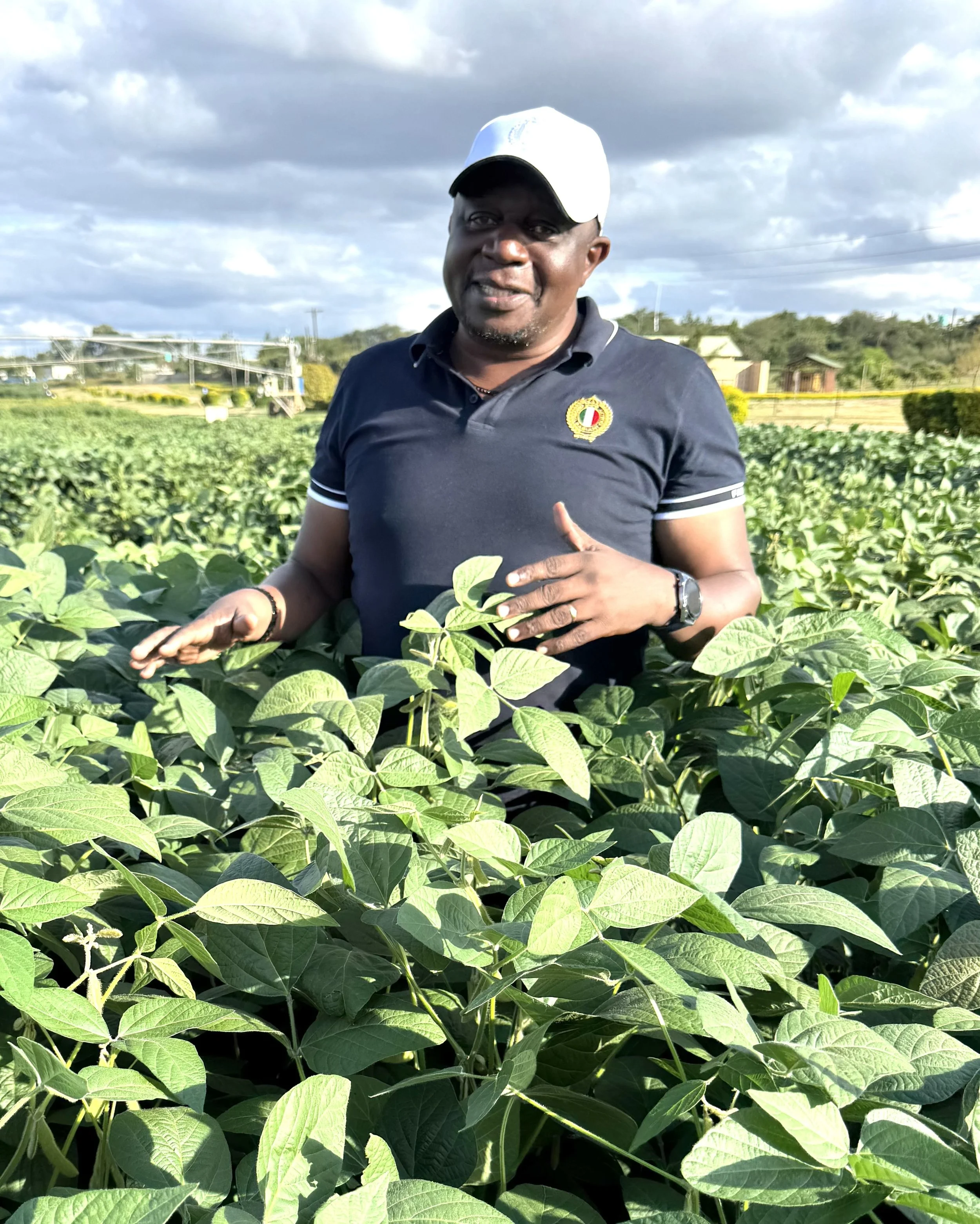
Godfree Chigeza at IITA’s Lusaka station
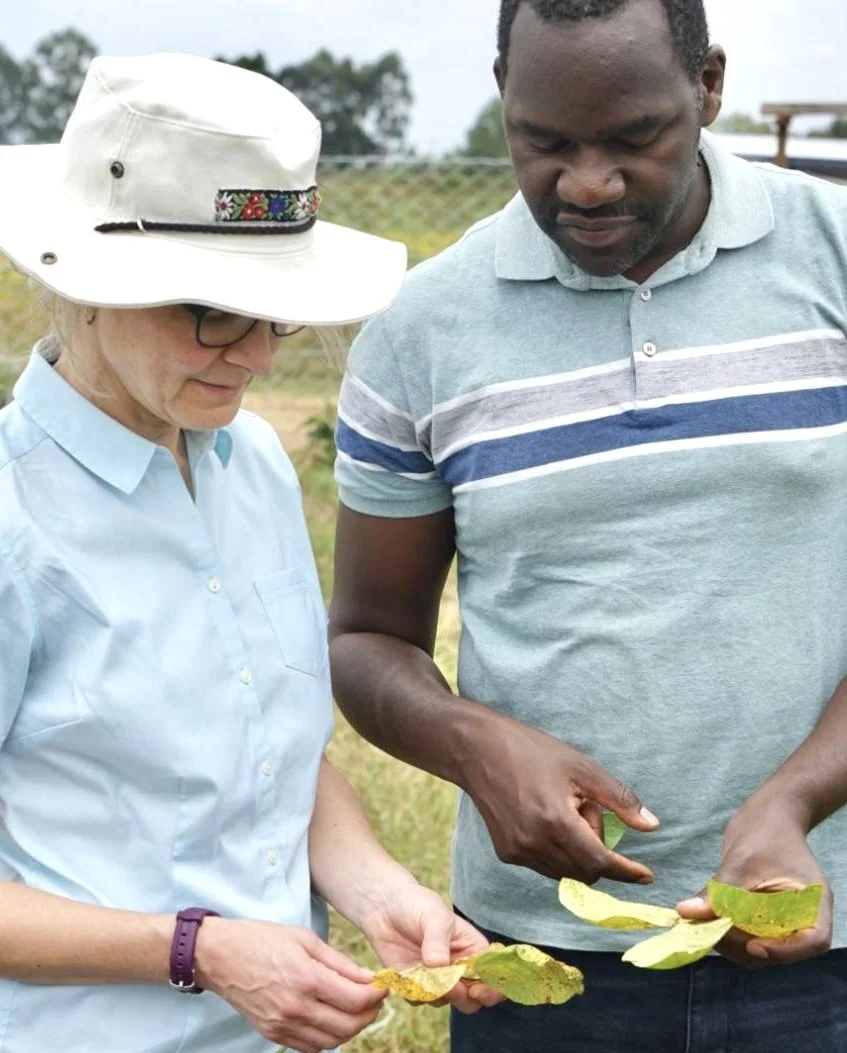
Harun Murithi examines soybean rust with Diana Horvath
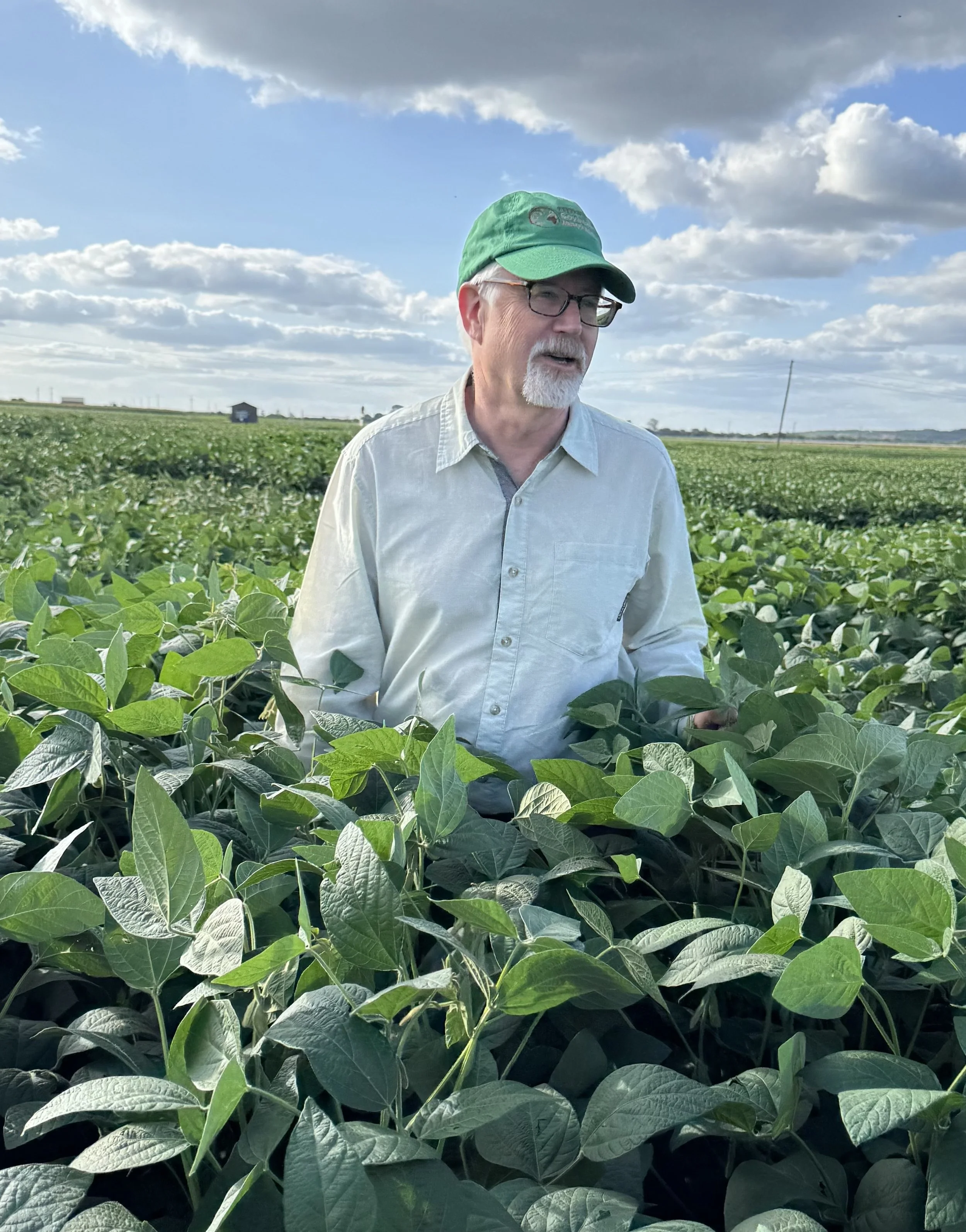
Brian Diers at IITA’s soybean breeding trials