

Spotlight Series: A Conversation with Eric Ward
Eric Ward has been involved in the agbiotech industry for nearly four decades, including serving as 2Blades’ former President and current Board Chair. He is also a co-founder of Norfolk Healthy Produce, the company behind the Purple Tomato. In this wide-ranging conversation, Eric reflects on his early aspirations in agbiotech, the realities of building in the startup space, and how an unconventional business approach was influenced by the Grateful Dead.
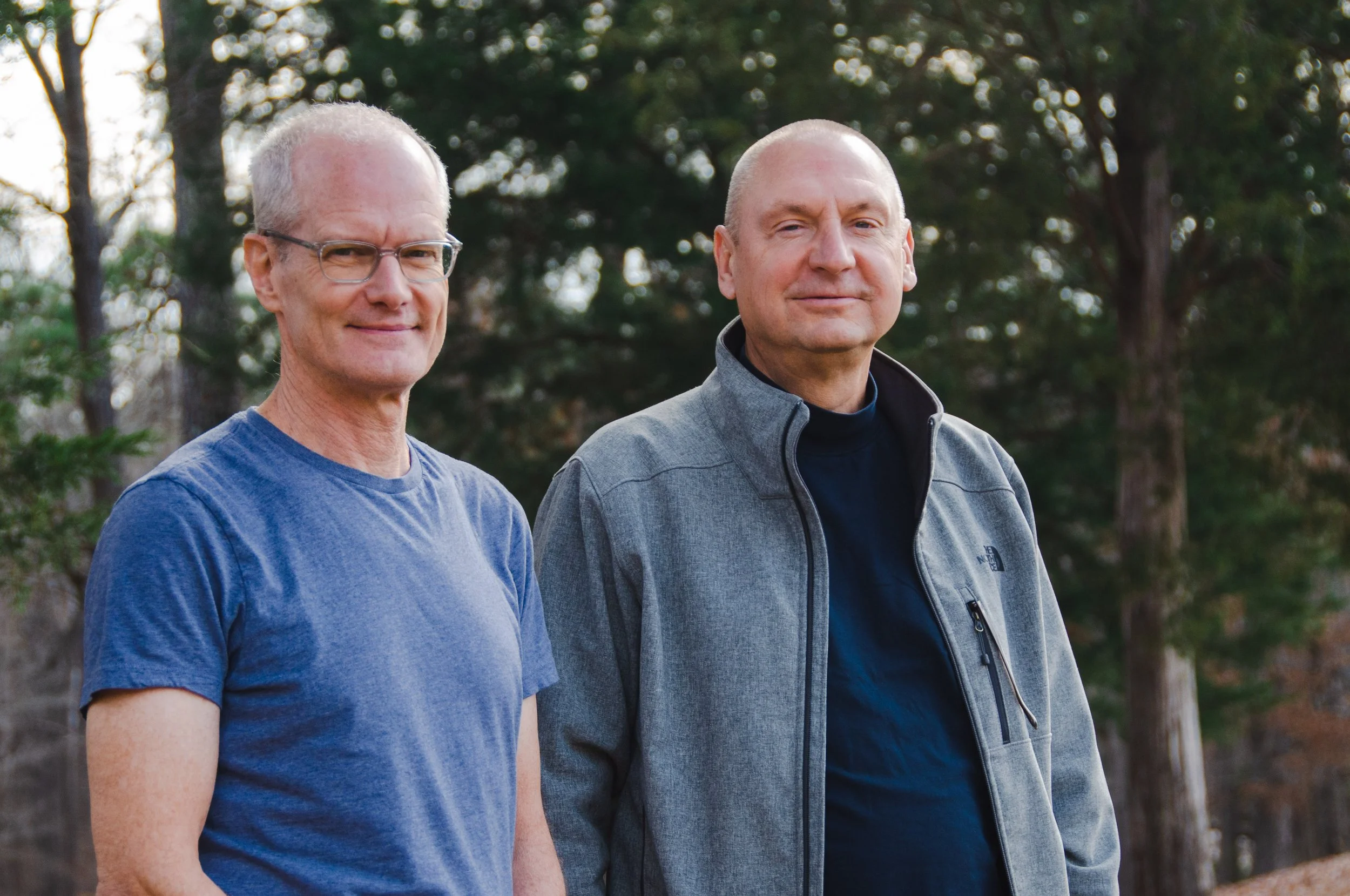
Eric and Scott Uknes, his best friend, grad school classmate and AgBiome co-founder
How did you first get interested in plant science? What were your early aspirations?
I’ve always been interested in living organisms. I was the kid collecting bugs in jars.
When I arrived at Duke for my undergraduate degree, I met some botany graduate students who were so welcoming. I just thought they were some of the coolest people I’d ever met, and that pulled me in pretty quickly.
I took a plant anatomy course, which is about as stodgy as plant biology gets, slicing plants and looking at them under a microscope. But the professor and the teaching team made it really engaging. From there, I just kept going deeper. First plant physiology, then biochemistry, then molecular biology.
At the same time, this was when genetic engineering was just starting to take off. Genentech had just emerged, and there was a sense that something important was happening. That definitely influenced me and pushed me toward plant molecular biology in graduate school at Washington University in St. Louis.
In terms of aspirations, I just thought it was a fascinating, emerging field that could turn into something real. And I knew I didn’t want to go the pre-med route like a lot of people around me. I wanted to do something a little different.
How do you look at those aspirations now with the experience of a full career?
Looking back, what started as an incredibly promising technological revolution became a regulatory nightmare in the late 90’s when companies tried to market their products globally, especially in Europe. And that happened for a bunch of reasons, none of which have any scientific merit, but are very real barriers to progress. So we are still just scratching the surface of the amazing promise of these technologies because the regulatory environment has slowed things down ever since.
If you look at the products that have made it to market, they’re still mostly based on ideas from the late ’70s and early ’80s, particularly Bt for insect resistance and tolerance to the herbicide glyphosate. We’re 40–50 years in, and we’re still largely working off those first-generation breakthroughs.
So my early aspirations were partially borne out — the science worked and created significant breakthroughs. It’s just that all kinds of forces made subsequent progress much harder to fully realize.
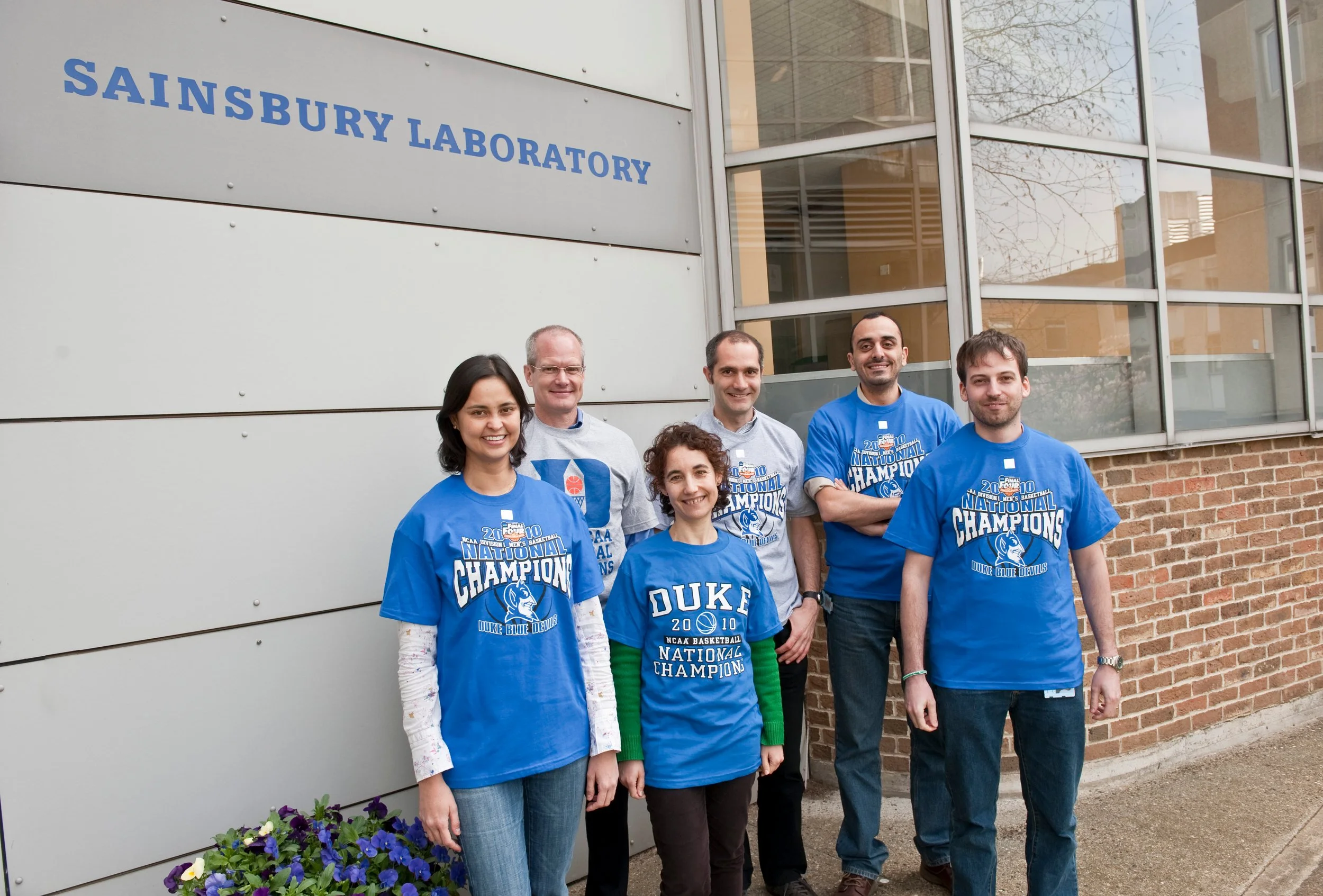
The early days of the 2Blades group at The Sainsbury Laboratory (shortly after Duke basketball won the national championship in 2010)
You’ve also been involved in the agbiotech start-up space. How has that landscape evolved? Where does the industry still struggle?
It’s a tough space. There’s really no way around it.
Part of what’s changed is just the level of consolidation. You’re down to a handful of major players now, which reduces competitive pressure among them to innovate aggressively, and also limits the possibilities for a trade sale exit of your small company.
If you go back a couple of decades, a lot of the smaller, even moderately successful ag biotech companies had some kind of relationship with Monsanto. They understood the value of external innovation, and they had the capital to take some calculated risks. That’s just not the same environment today.
So now you have fewer buyers, less competition, and that feeds back into the whole system.
Then you layer in the timelines. Venture capital is typically working on a 10-year clock. Agriculture just doesn’t operate that way. It can take years just to get something to the point where it’s even close to being a viable product, and then adoption itself can take multiple seasons.
And adoption is another piece people underestimate. Growers already have to deal with uncertainty around weather, commodity prices, input costs, etc. So if something is working, they’re not going to change it unless you can show very clearly that the alternative is better, and better consistently.
Beyond investment models and adoption challenges, another issue is talent flow. In pharma, it’s common for senior executives to spin out and lead startups. That’s much rarer in agriculture, which creates a bit of a chicken-and-egg problem resulting in fewer experienced leaders entering the startup ecosystem.
None of this means it’s not worth doing. In fact, I’d argue that this is precisely why non-traditional organizations like 2Blades can be successful. It just means you have to go in understanding how the system actually works.
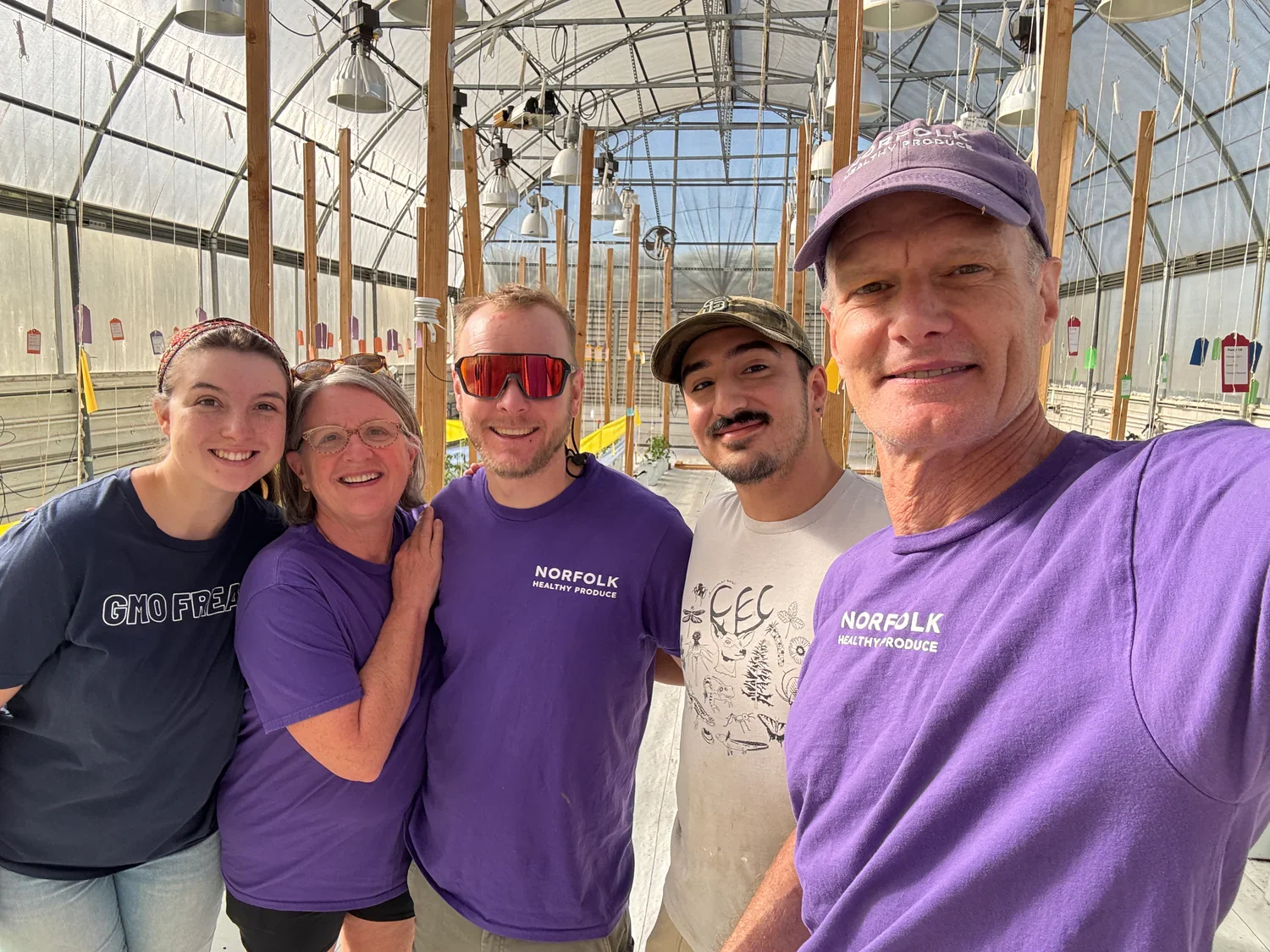
The greenhouse team at Norfolk Healthy Produce
You were part of the founding team at Norfolk Healthy Produce… what has it been like to see the Purple Tomato go from concept to consumer product?
It’s been super rewarding. It’s also been a long road. I sometimes call it an 18-year overnight success story.
Breaking into fresh produce retail is hard. There are a lot of stakeholders involved, and you have to grow at a pace that the supply chain can handle.
But the really interesting part has been the consumer response. It’s been extraordinary and really helped with our success.
We’ve sold over 25,000 packets of seeds to home gardeners and are present in major grocery retailers across the mid-Atlantic US, with expansion into Canada and Australia this year.
If you step back, consumers have responded to its key features: it looks beautiful (has a deep purple color throughout the fruit), it tastes good, and it has a clear nutritional benefit.
Once people see that, they don’t really care that it was genetically engineered. What they reject is based on unclear benefit or lack of trust, not the technology itself.
AI is rapidly reshaping science. What excites you most and what concerns you?
I am optimistic in how AI can help us generate new hypotheses that can open new frontiers for science. The question is where it can actually change the game, and where it can’t, at least not yet.
“There’s still a component of human ingenuity in all of this that goes back to experimental science. AI can help you see patterns, but it can’t fully replace that.”
It’s very good at working through large datasets and identifying patterns that would be difficult, or impossible, for a person to pick up. You’re already seeing that with things like protein structure prediction. That’s why I think it’s pretty good at generating hypotheses at this point. But it’s not really at the point yet where it can go much beyond generating data in vast quantities. There’s still a component of human ingenuity in all of this that goes back to experimental science. AI can help you see patterns, but it can’t fully replace that.
Where I think people get ahead of themselves is on the application side. There are a lot of claims out there, especially around accelerating crop breeding, that just aren’t supported yet.
The models need a huge amount of high-quality phenotypic data, and that’s still a bottleneck. And more broadly, AI doesn’t remove other bottlenecks like regulatory systems or adoption barriers, which are historically more limiting than discovery itself.
I tend to agree with Tyler Cowen’s thinking that there really are no such thing as bubbles; it just takes time for these things to work themselves out. I think that’s where things are with AI. In the long term, it’s going to be enormously transformative in plant breeding, but we will go through the typical hype cycle before getting there.
So I’m optimistic, but skeptical of some of the claims. Don’t believe everything you read right now.
What advice would you give to young scientists entering this field?
You should go into it because you care about the impact.
If you’re looking for an industry where you can start a company, exit quickly, and make a lot of money, there are easier paths.
But if you step back, it’s one of the most important industries there is. It’s foundational.
One thing I’d emphasize is that a lot of the real value comes from carrying things through. Discovery is important but getting something all the way to the point where it actually works in the field is a different kind of challenge.
That’s where a lot of things fall apart, and it’s also where a lot of the impact comes from.
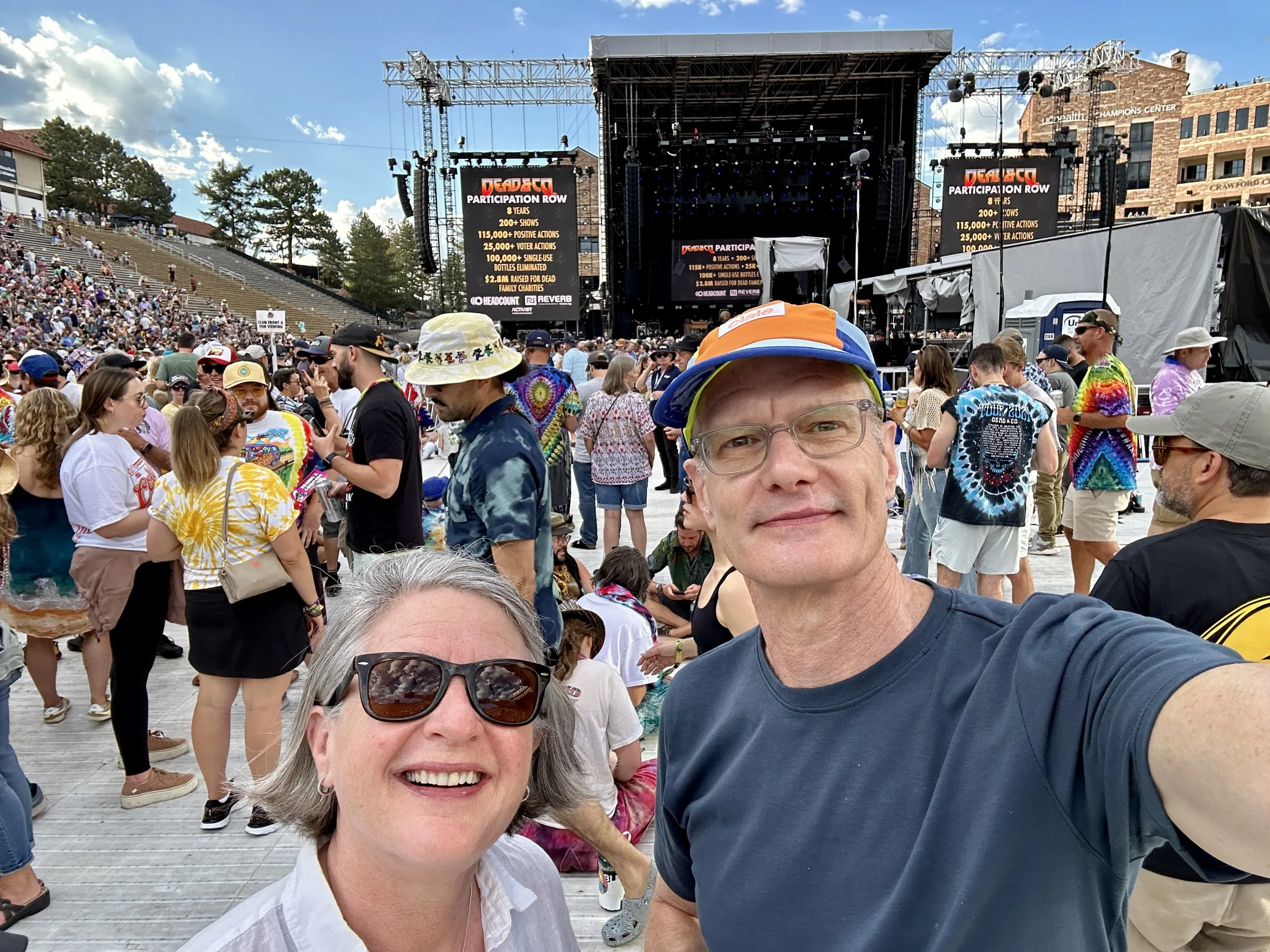
Gerty Cori Ward and Eric at a Dead & Company show Boulder, Colorado, 2023.
I understand you gravitate toward the philosophies of certain musicians. Does that influence your work?
Absolutely. Nate Pumplin, the CEO of Norfolk Healthy Produce, and I took inspiration from the Grateful Dead when we were thinking about how to distribute the Purple Tomato.
They notoriously (in the eyes of the traditional music industry) allowed people to record and share their concerts, which created a really strong network effect and loyal following. The only rule was that tapers couldn’t sell the recordings for profit.
We’ve taken a similar approach. We encourage people to save seeds, share them, grow their own plants, even experiment with breeding. The only restriction is that you can’t sell it.
That’s created a passionate community that helps promote and even protect the intellectual property around the product. It’s been a really effective model and inspired mainly by our affinity for the Grateful Dead.
You’ve worn many hats at 2Blades over the years. What first drew you to the organization?
I got connected to 2Blades after leaving a startup that had received funding from a venture firm where Diana Horvath worked. I had also met Roger Freedman earlier, and I was intrigued by what they were trying to build at 2Blades.
When I left that company in 2007, I joined 2Blades as President and helped lead the team in Norfolk at The Sainsbury Laboratory, including work that contributed to programs like soybean rust.
What drew me in, and what’s kept me involved, is the chance to work at that intersection between cutting-edge science and real-world application.
2Blades sits in a pretty unique spot. We’re focused on taking discoveries and pushing them toward something real, but we’re also willing to go far enough into exploratory work to be a valuable partner to industry, and one that’s built an excellent reputation for quality and trustworthiness.
“The work we’ve done in Asian soybean rust is groundbreaking. It’s seminal. Nobody has done anything close to it.”
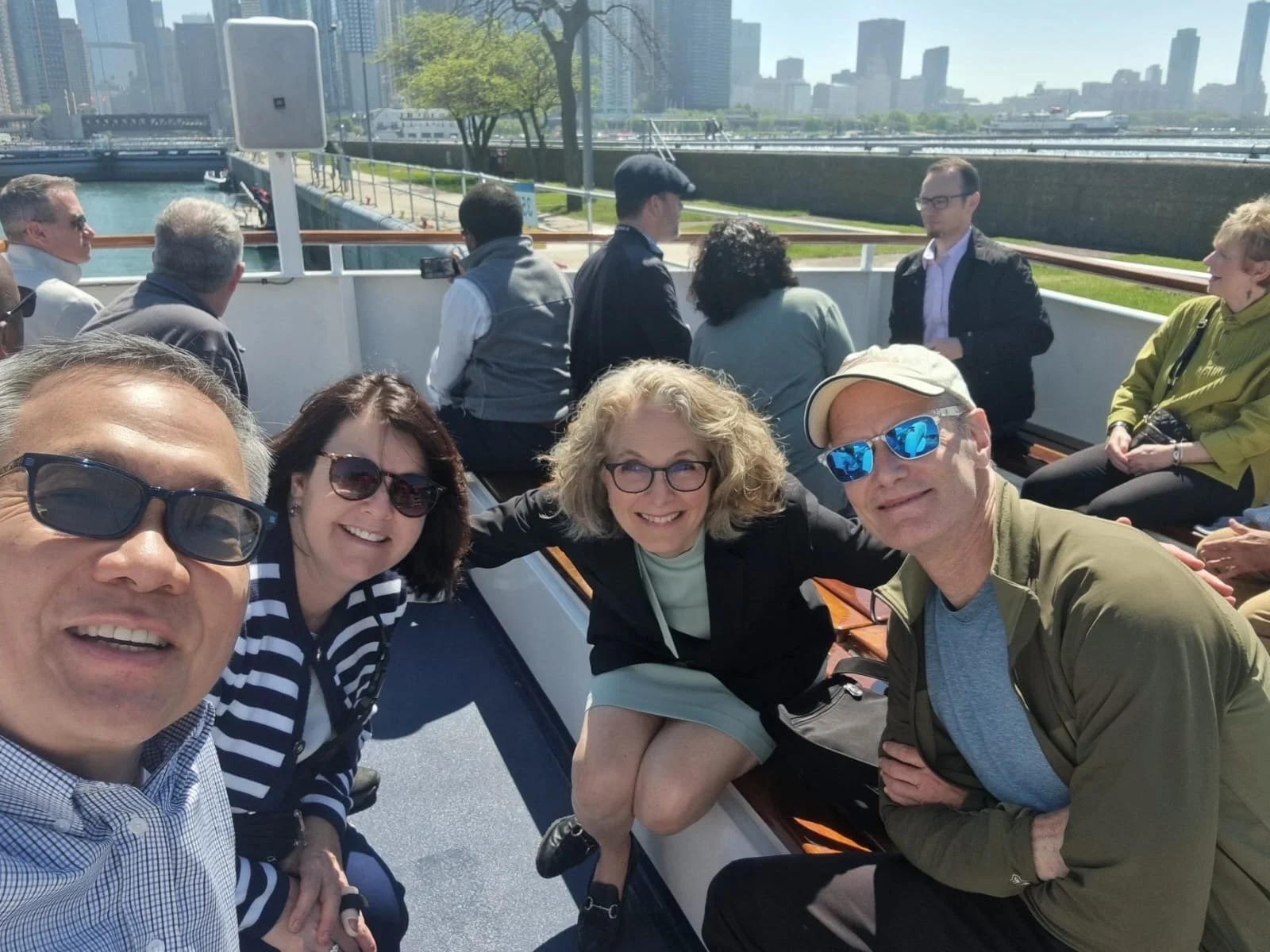
Architectural tour of Chicago during 2Blades’ board meeting; (L to R): Bernard Fung, Kathy Yamada, Diana Horvath, Eric Ward. 2024.
Why does the work 2Blades is doing matter right now?
A lot of the traditional pathways for getting innovation into the field just don’t line up very well.
You’ve got academic labs that are very good at discovery, but they’re not really set up to carry things through to application. They’re focused on publishing and moving on to the next idea.
On the other end, you’ve got large companies that are less well suited to early-stage, exploratory work, for a lot of the same reasons we talked about earlier.
And then startups are trying to operate in a system where the timelines don’t match the funding models, and where there are only a few potential buyers at the end of the process.
So there’s this middle space that doesn’t get covered very well. That’s really where 2Blades fits in and why what we are working on right now is so exciting.
If you look at disease resistance, nobody has ever really commercialized a transgenic disease-resistant crop variety. The work we’ve done in Asian soybean rust is groundbreaking. It’s seminal. Nobody has done anything close to it.
And you’re starting to see that show up in the pipelines of commercial seed companies, either directly building on that work or through follow-on efforts that came out of what 2Blades published.
We’re able to take ideas that are promising but not yet proven and push them forward in a way that neither academia nor industry is really structured to do. We push them through the hardest part, which is the final stretch from discovery to something that actually works in the field.
And that last 10% is usually harder, and honestly more boring, than the first 90%. But without it, you don’t have any real lasting value.
Very few organizations are structured to do that. That’s what makes 2Blades unique, and why I have remained involved in its work for coming up on twenty years.