

NLRseek™ Findings Published in Nature Plants
The proof-of-concept study published in Nature Plants highlights the program’s success in identifying new resistance genes against two of the most damaging wheat pathogens: stem rust (Puccinia graminis f. sp. tritici) and leaf rust (Puccinia triticina).
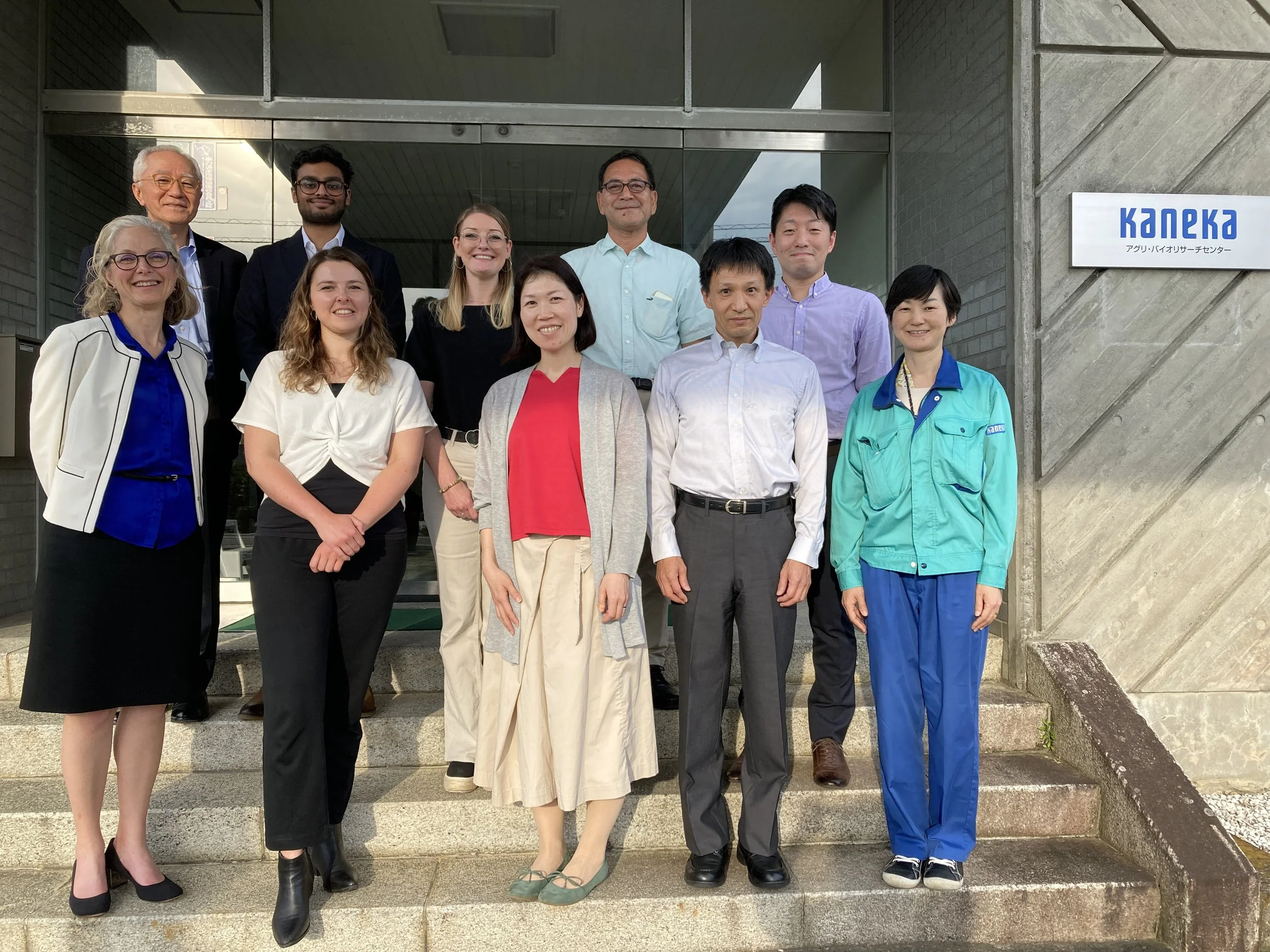
2Blades delegation with Kaneka team; 2023
Scientists from 2Blades, The Sainsbury Laboratory, University of Minnesota, and Kaneka Corporation have drawn on recent findings to demonstrate an effective new approach for identifying and validating resistance genes.
The publication in Nature Plants marks the culmination of a unique public-private partnership that cloned nearly 1,000 new NLR resistance genes from 18 grass species and wild relatives of wheat. These wild relatives provide a vital genetic resource for identifying durable, long-lasting resistance genes that can be used to improve wheat and other critical food crops.
Using Kaneka’s highly efficient wheat transformation technology and building on the expertise in cereal rusts at the University of Minnesota, the team validated 19 new NLRs against stem rust and 12 new NLRs against leaf rust: doubling the number of resistance genes cloned against these diseases over the past 30 years.
By combining deep scientific expertise with cutting-edge biotechnology, the team of researchers showed that functional immune receptors (NLRs) can be identified based on expression level. Specifically, the study demonstrates how functional genes can be quickly predicted from sequence data, reducing the time and resources typically required in conventional approaches.
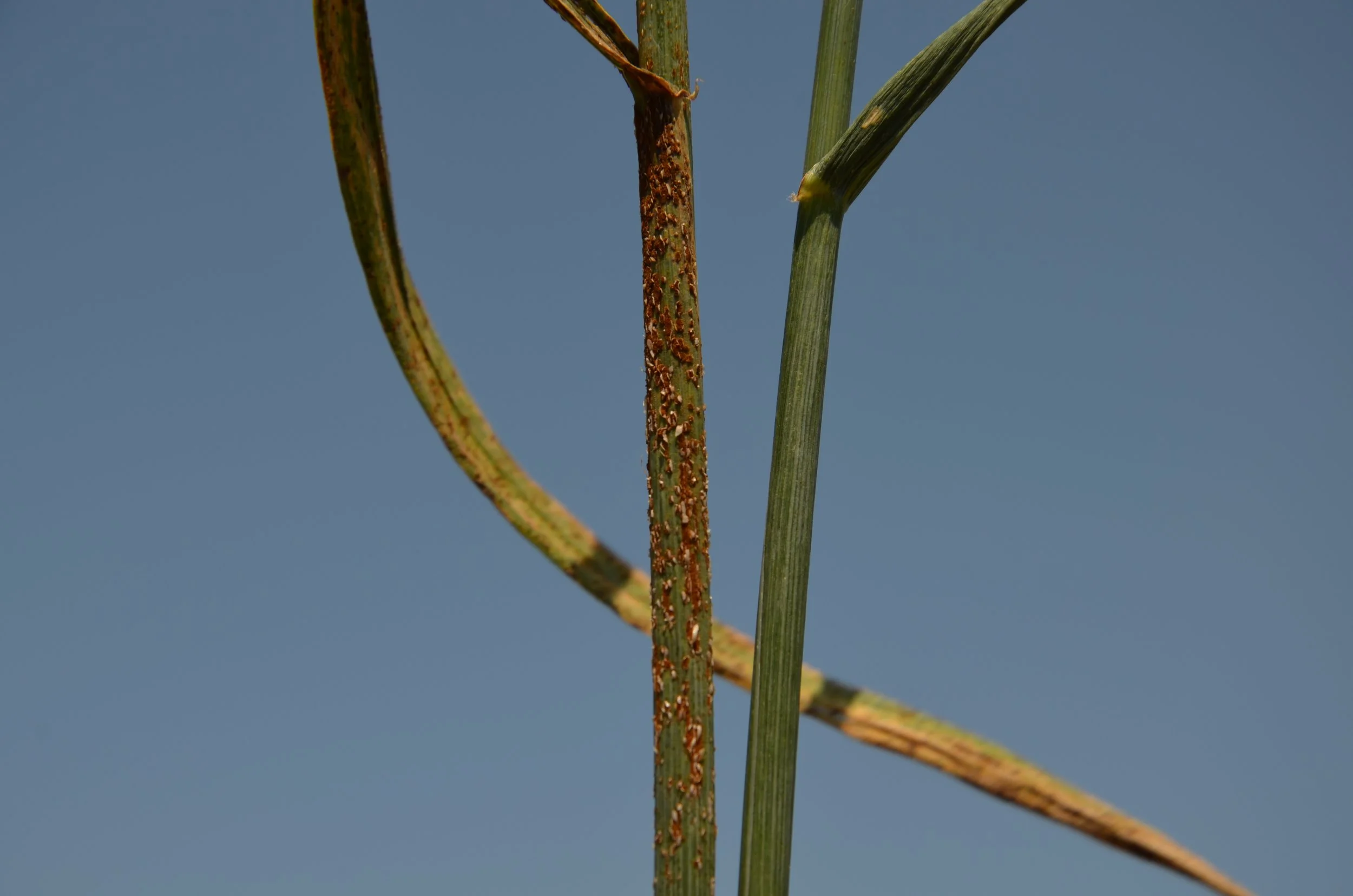
Wheat stem rust taken from field trials
In total, the program generated a library of 5,177 independent transgenic lines. This study focused on stem rust and leaf rust, but the library can also be used to search for resistance to many other plant diseases. As emerging pathogens and virulent strains continue to spread at an alarming rate, this approach makes it possible to quickly identify and validate promising genes that could help protect crops against pathogens that threaten global food security.
Read the full study here: https://www.nature.com/articles/s41477-025-02110-w
About NLRseek™
Nucleotide-binding Leucine-rich Repeat (NLR) proteins are one of the two main classes of plant immune receptors, capable of recognizing pathogen “effector” proteins and triggering a strong immune response. Because NLRs are highly specific, finding the right receptor that recognizes the variation of effectors within and between pathogen species has been extremely challenging. As a result, many crops succumb to disease because they lack the right receptors to combat major pathogens.
NLRseek™ is a proprietary gene discovery technology that rapidly identifies functional NLR resistance genes from diverse sources, including wild relatives. It is part of 2Blades’ broader BladeSeek™ platform, a suite of high-throughput gene discovery tools that can accelerate the identification and validation of disease resistance genes for wheat, corn, soybeans, potatoes, and other crops essential to global food security.
The NLRseek™ program has already produced one of the largest characterized datasets of functional NLRs in plants, and in collaboration with Computomics, STFC Hartree Centre, and IBM, 2Blades is exploring how machine learning can be applied to better predict NLR expression and functionality for future applications.
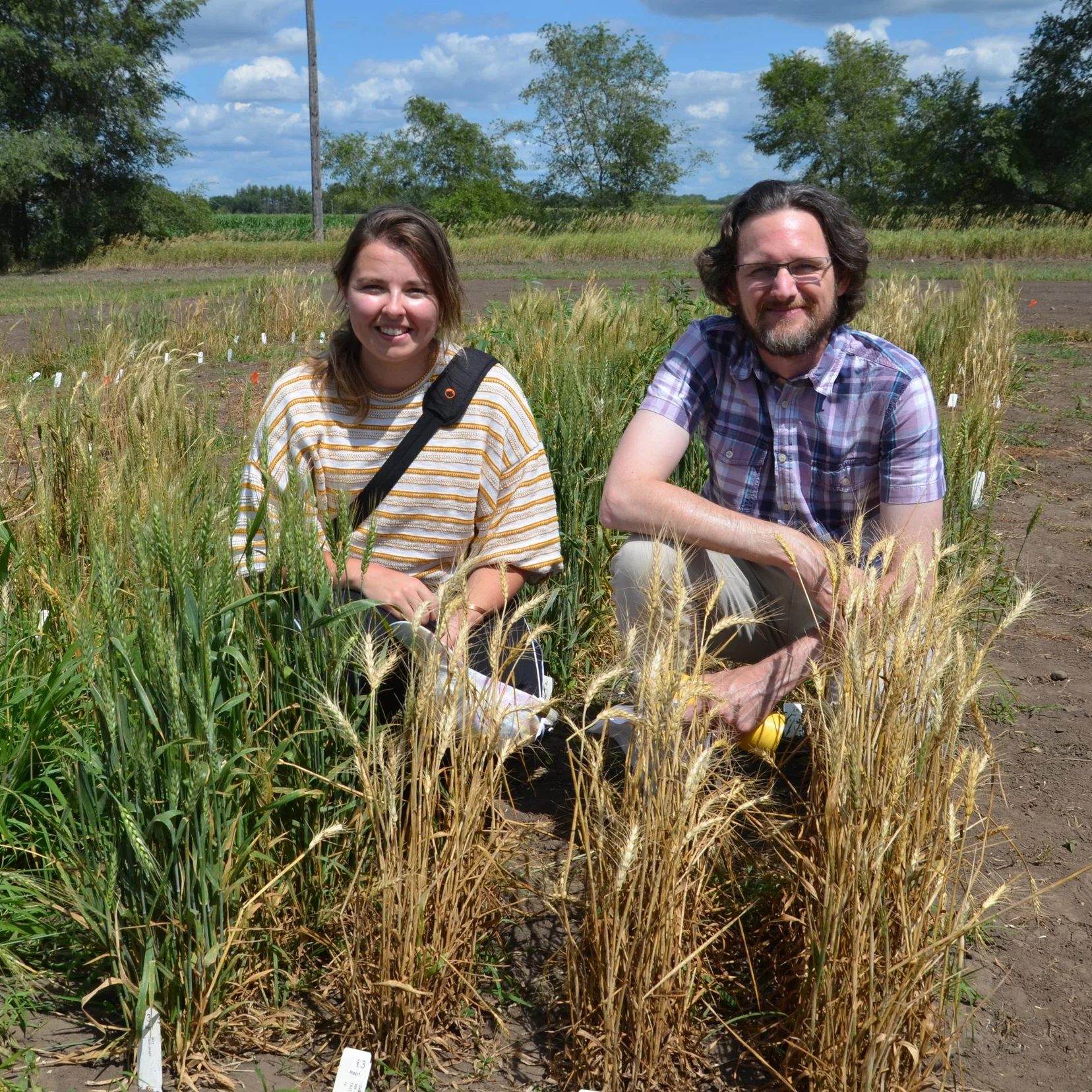
Co-authors Helen Brabham (2Blades) and Matt Moscou (USDA) at the NLRseek™ field trial managed by Brian Steffenson and Oadi Matny (University of Minnesota). The photo demonstrates stem rust resistance (left) with susceptible lines (right).