

October 28, 2026
A 2026 World Food Prize Borlaug Dialogue side event
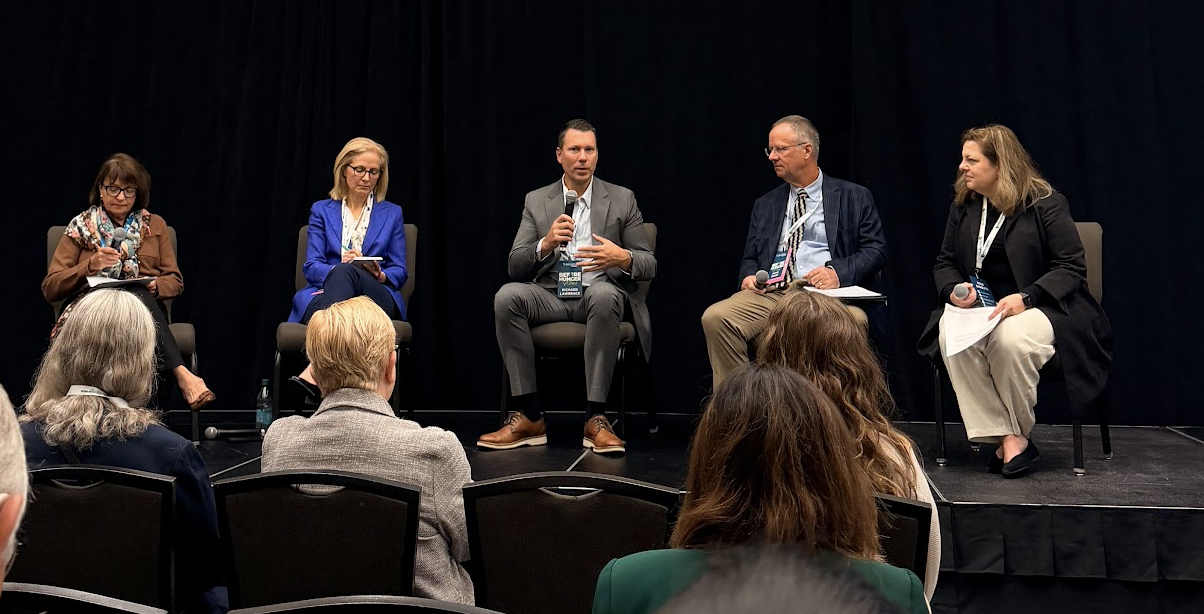
FJF and 2Blades panel. Left to right: Judy Chambers, Diana Horvath, Rick Lawrence, Dave Bubeck, Rose Barbuto. Source Megan Bohan, FJF.
Last week, the Farm Journal Foundation and 2Blades co-hosted an event, “Dawn of a New Era: How Sequencing Crop Genomes Can Usher Agriculture’s Next Great Leap Forward,” that examined how genetic resources held in public germplasm collections can help deliver value for agriculture.
A central message emerged: sequencing can unlock enormous value through developing more resilient crops that can protect farmers’ livelihoods and strengthen food and nutrition security. Realizing that value requires identifying genes, validating their function, and moving discoveries into crops that farmers can grow.
Farm Journal Foundation (FJF) CEO Tricia Beal opened the event, followed by a keynote talk from the U.S. Department of State’s Deputy Assistant Secretary Meghan Hanson. FJF’s Rose Barbuto moderated a panel featuring Diana Horvath of 2Blades, David Bubeck, formerly of Corteva Agriscience, Judy Chambers of IFPRI and CGIAR, and Rick Lawrence of Bayer Crop Science. The discussion connected plant science and germplasm conservation with public investment, commercial development, and international collaboration.
The tip of an iceberg
The immediate policy backdrop was USDA’s Seed Sovereignty Initiative, a $180 million investment to map and use genetic resources in the National Plant Germplasm System. Speakers considered how this effort could support U.S. agriculture, while complementing international collections.
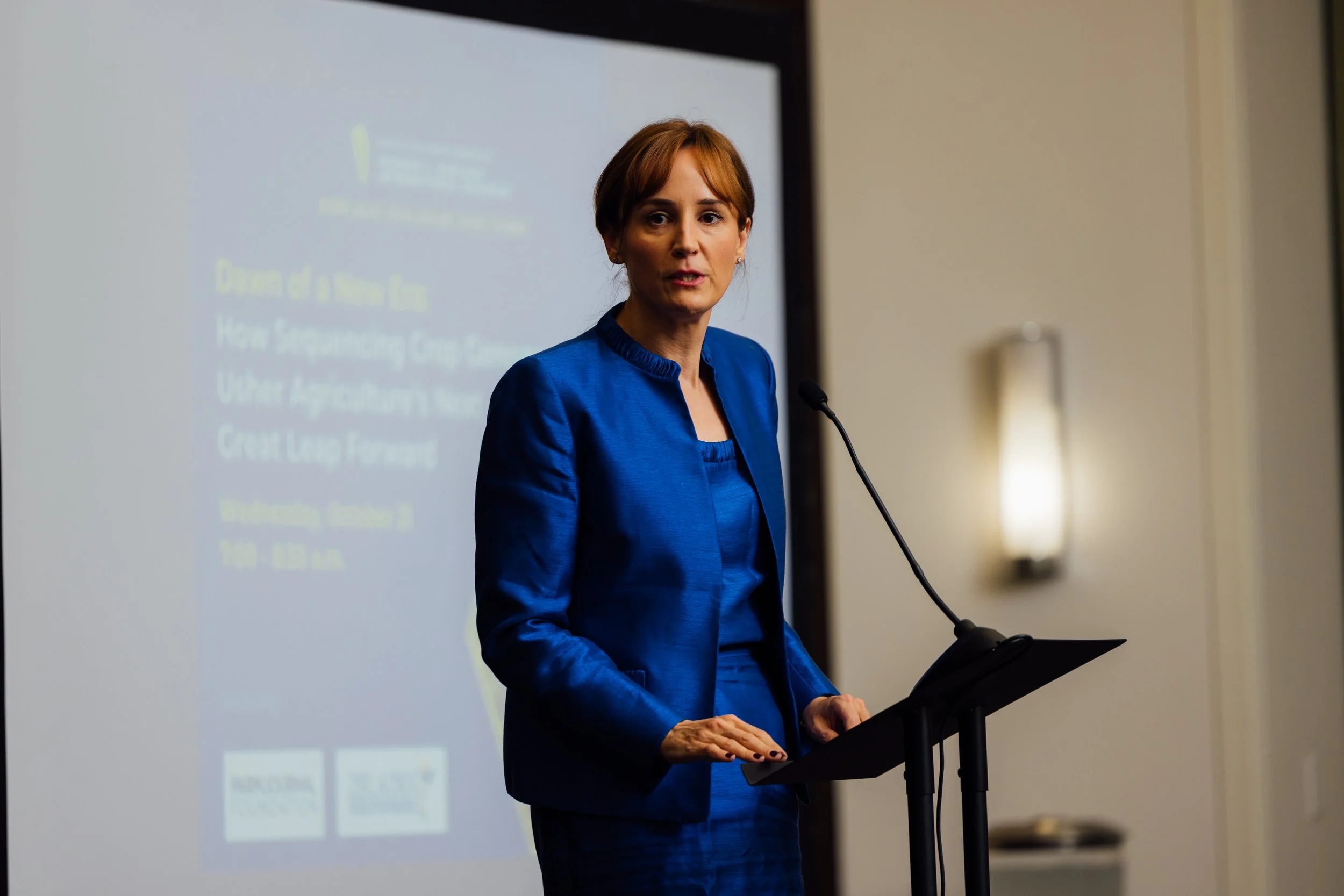
State Department Deputy Assistant Secretary Hanson gives keynote remarks. Source, World Food Prize.
DAS Hanson framed support for and access to agricultural innovation as a way to help partner countries anticipate shocks, strengthen food security, and create demand that also benefits American interests.
Horvath explained that a genome is the total complement of genes in an organism. The Human Genome Project, launched in the 1990’s, produced the total genome of one species, and that effort produced hundreds of new medicines, hundreds of thousands of diagnostic markers, and hundreds of billions of dollars in genomics-based income per year. It’s hard to estimate an economic return from sequencing multiple plants, but there is unquestionably an enormous potential value – for traits, novel medicines and bioproducts, and safeguarding biodiversity. It helps that the cost per genome is now 5 orders of magnitude cheaper, from $3B to $10,000, and continuing to drop.
Horvath emphasized how much plant diversity remains unexplored: as of September, 2026, fewer than 1 percent of known land plant species have complete genomes. She distinguished “species’ from “accessions” - individual samples of one species that captures its variation - and the value of both. Bubeck described the U.S. system as a national treasure, holding more than 600,000 accessions representing 16,000 species across 19 locations. Maintaining and characterizing these living collections is itself a substantial undertaking.
Chambers described CGIAR’s role in conserving and sharing globally important crop diversity, including material from crops’ centers of origin. The discussion highlighted opportunities to coordinate U.S. and international collections and to extend benefits beyond major row crops to crops important for nutrition. Speakers pointed to the importance of public and private partnerships, including the longstanding Germplasm Enhancement of Maize project - a strong example of a sustained collaboration.
Lawrence emphasized that sequencing alone does not provide the functional information needed to effectively use advanced breeding tools, like gene editing. Farmers face growing disease pressures, including southern rust and tar spot, as well as combinations of stresses such as heat and drought. Useful genetic diversity must be linked to demonstrated traits before it can become a practical breeding or editing solution. Continued investment in genebanks, research, and validation is therefore essential.
Proof-of concept
Horvath illustrated the opportunity represented by plant diversity through 2Blades’ work on disease resistance and exploring wider gene pools in crop relatives. For example, Fusarium causes diseases that reduce wheat and corn yields and contaminate grain with mycotoxins that harm people and animals. Scientists have worked for decades to breed for resistance to Fusarium, but crops today are still susceptible, and mycotoxin contamination is increasing across the US and Europe.
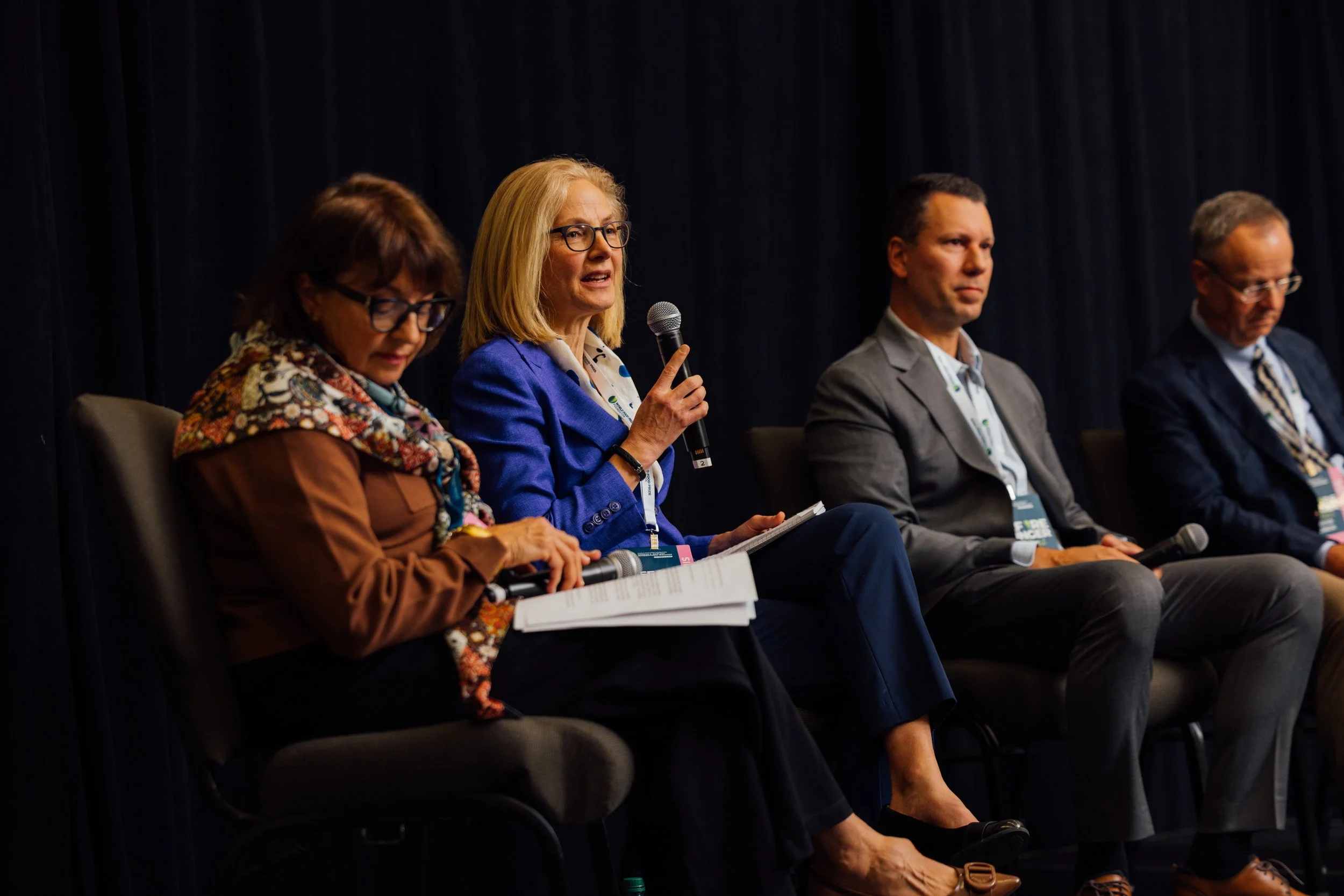
Diana Horvath discusses resistance genes in crop relatives. Source, World Food Prize.
2Blades turned to wild grasses for resistance options, building AI tools and high throughput assays. Around 1,000 distinct resistance genes from 69 accessions of 18 grass species were selected and introduced individually into wheat in collaboration with Kaneka Corporation. Screening just one fifth of that collection identified more than 10 genes conferring protection against Fusarium. The same resource was screened against wheat stem, stripe, and leaf rusts and wheat blast, yielding approximately 80 field-validated resistance genes across five major wheat diseases to date.
The example showed how plant diversity combined with validation efforts can open up new options for traits, change the speed and cost of discovering useful traits, and create value across multiple disease targets.
What’s next?
A survey of audience opinions showed that respondents valued the prospect of plant genome sequences in their work, for example advancing improved traits in a range of applications, most prominently for disease resistance and drought tolerance.
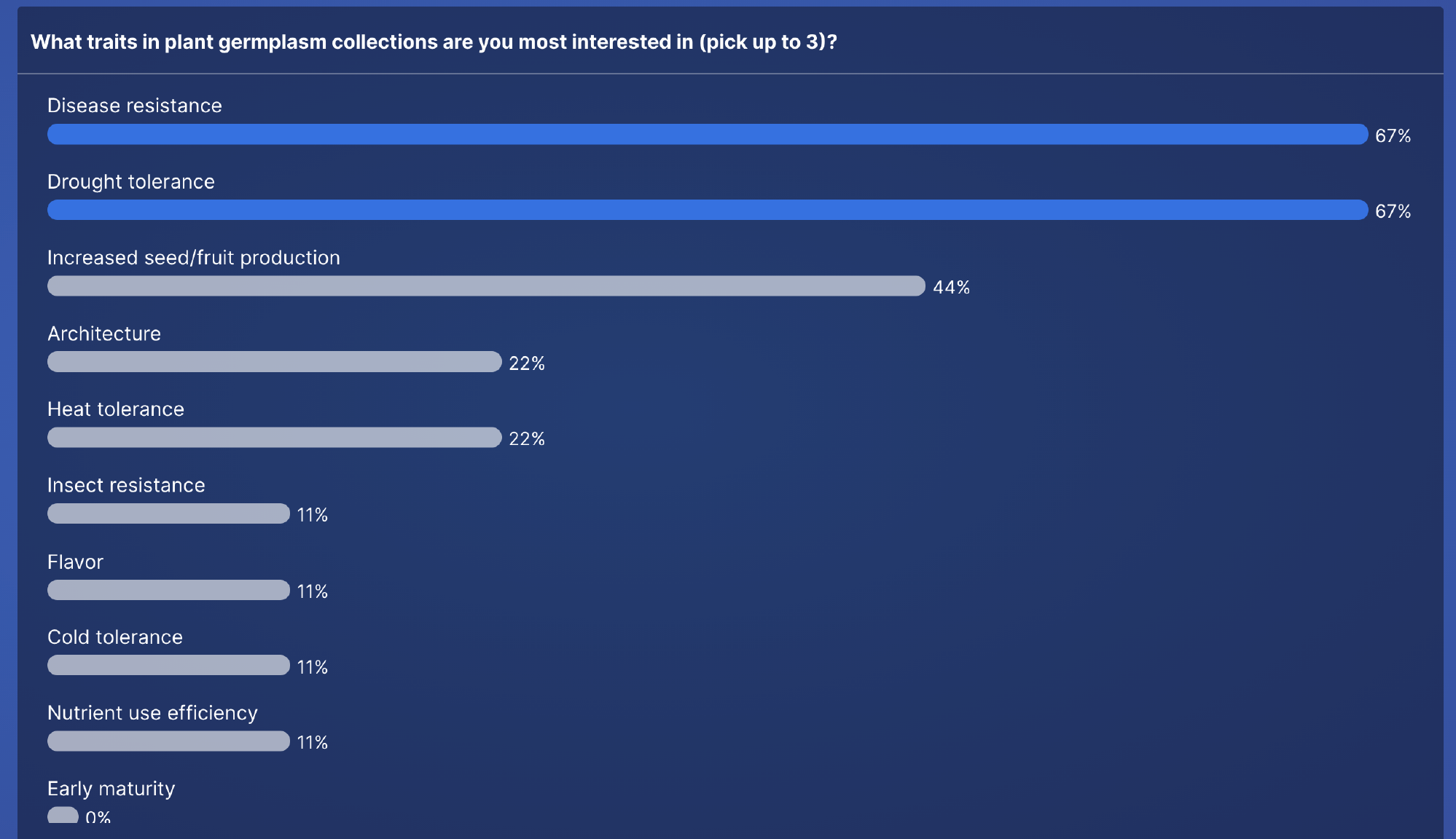
Side event survey response, October 21, 2026. Source, 2Blades.
The panel discussion and audience responses underscored several critical themes needed to achieve the potential value now within reach:
· Genetic diversity is a strategic agricultural resource. Germplasm collections hold enormous potential for addressing emerging diseases, environmental stresses, and future food needs.
· Sequencing is a starting point. Functional characterization, field validation, and crop development are needed to turn genetic information into farmer benefits. It creates raw materials for researchers, technology providers, seed and food companies to develop to deliver benefits for farmers and consumers.
· Conservation and innovation need sustained support. Sequencing investments depend on well-maintained collections and continued funding beyond initial discovery.
· U.S. and international efforts can reinforce one another. Coordinated collections and partnerships can support American agriculture and global food and nutrition security.
· Delivery should guide investment. Success ultimately depends on whether discoveries reach growers in the form of valuable traits in crops of interest in a faster time frame, as weather challenges and hungry populations create greater urgency.
The recent announcement by the USDA and the remarks of DAS Hanson at this event provide hope that a stable commitment to innovation in agriculture may be at hand.