

Commentary: Soybean Rust is a Visible, Immediate, and Often Severe Threat in Malawi and Zambia
Kamil Witek is Vice President and Group Leader of the 2Blades Group @ The Sainsbury Laboratory. He recently traveled to Zambia and Malawi to meet with collaborators, scientists, and growers to observe the impact of Soybean Rust in the region.
One thought really stayed with me as I visited soy growers in Zambia and Malawi, shortly after visiting soy growers in Brazil: in Africa, soybean rust is a visible, immediate, and often severe threat to harvests, livelihoods, and lives.
Soybeans are huge in South America, where more than half of the world’s crop is grown. In Africa, production is still small, around 1% globally, but the crop matters deeply. Demand for protein and oil is growing, and soybean is being promoted across sub-Saharan Africa, from more established systems in Zambia and Malawi to increasing production elsewhere.
Yet meeting this demand will remain fragile if major constraints like rust are not addressed in a durable way.
In Zambia, rust damage varies by region and season, but when conditions are conducive, the disease can be devastating. In Malawi, pressure is consistently high. We saw fields where yield potential had been reduced by 80–90%, with poorly filled pods and clear economic loss.
The farming context also matters. Around 75% of African soybeans are grown by smallholders, often as a low-input crop, so fungicides are rarely used. Larger farmers do spray, but timing and disease management remain a challenge. Other strategies, such as early-maturing varieties, do not consistently avoid disease, especially with variable rainfall.
A bright spot is the progress of the International Institute of Tropical Agriculture (IITA) breeding program. They have introgressed soybean rust resistance into locally adapted varieties, with lines showing far fewer symptoms. Further efforts to combine multiple native resistance genes can help safeguard production in the near term.
But there is an important reality: pathogens evolve. Under high rust pressure, even the best current materials will not last, as they rely on a limited pool of resistance genes already under strain.
Longer term thinking is critical. If the sector grows while resistance breaks down, investments will be at risk.
Brazil offers a comparison. Rust became the number one production risk 25 years ago, but sustained investment in chemical control and genetic resistance has enabled a successful industry. Durable resistance is not solved, but there is a clear trajectory toward more robust strategies, with biotechnology, including transgenic and gene editing approaches, playing a key role.
Will African systems follow this path, or leapfrog toward more durable solutions faster? Conventional breeding will remain important, but what will be the future of biotech traits in Africa? Solutions built into the seed could be transformative, especially for smallholders.
At 2Blades, we believe a durable solution to soybean rust is needed for Africa to realize the full potential of soybeans, supporting stronger livelihoods and more nutritious, diverse diets, and we are working to help deliver this future.
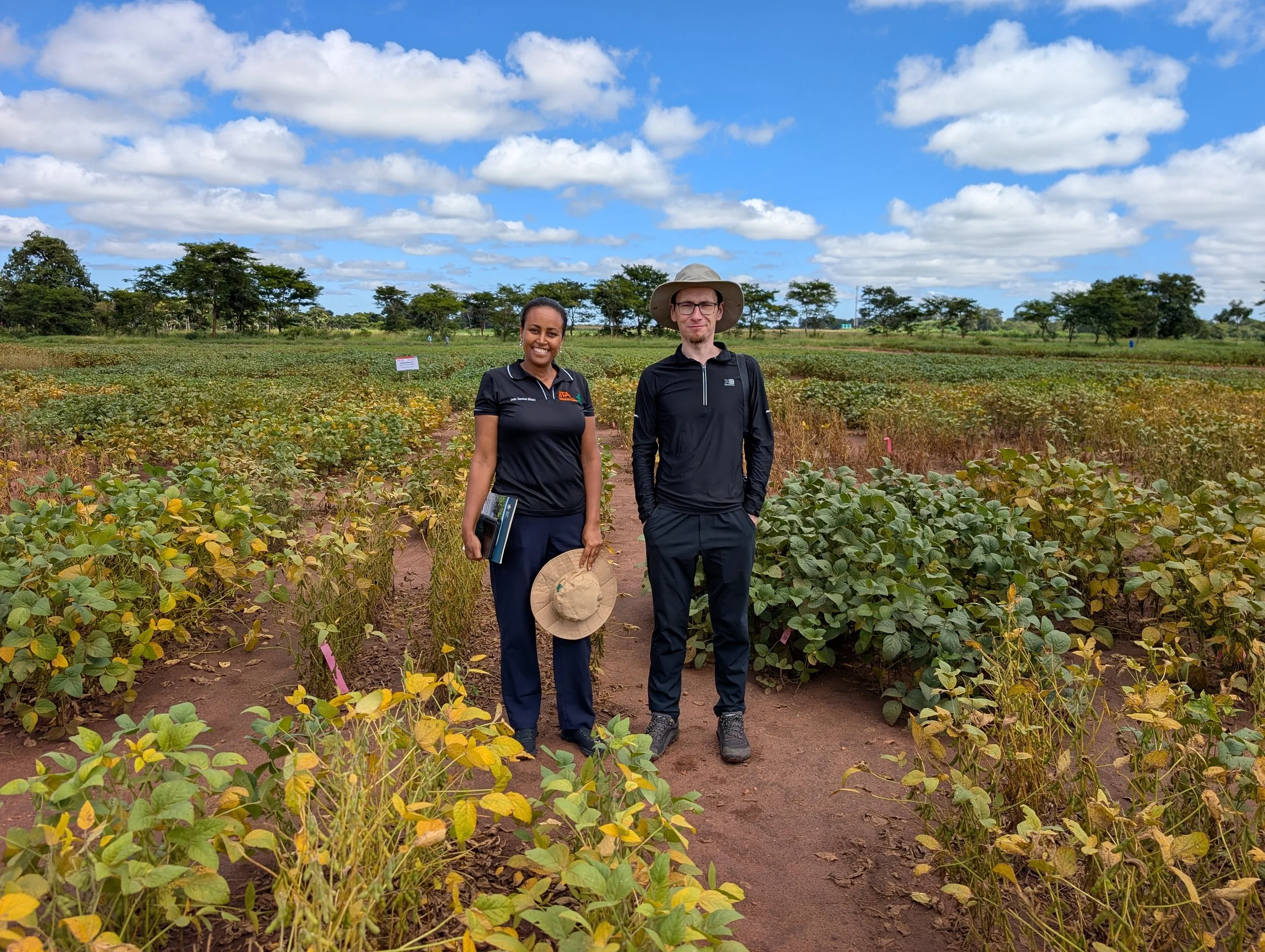
Kamil and Habtamnesh Girma Habtemariam visiting field trials in Malawi
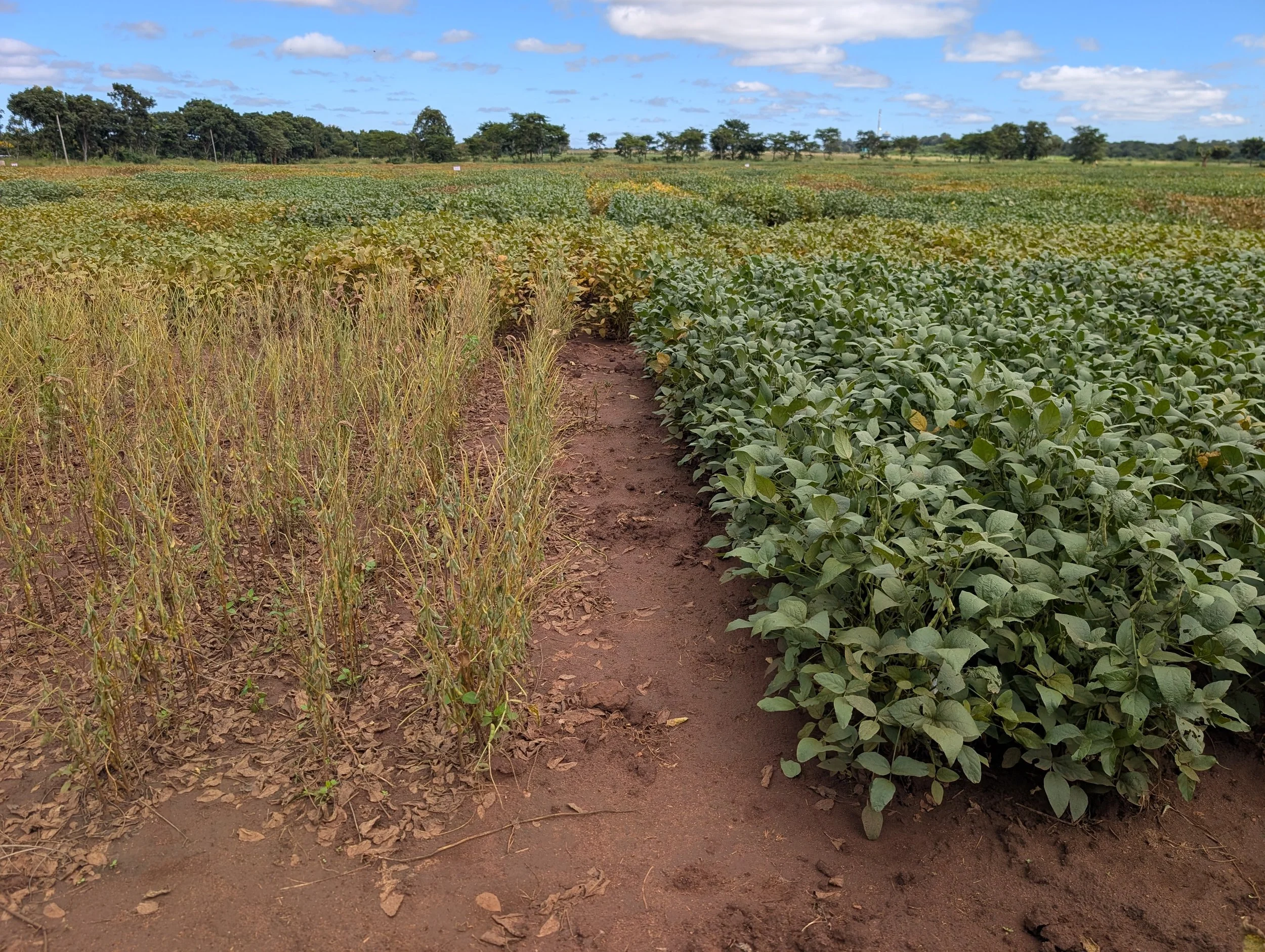
Susceptible and resistant soy varieties; Malawi
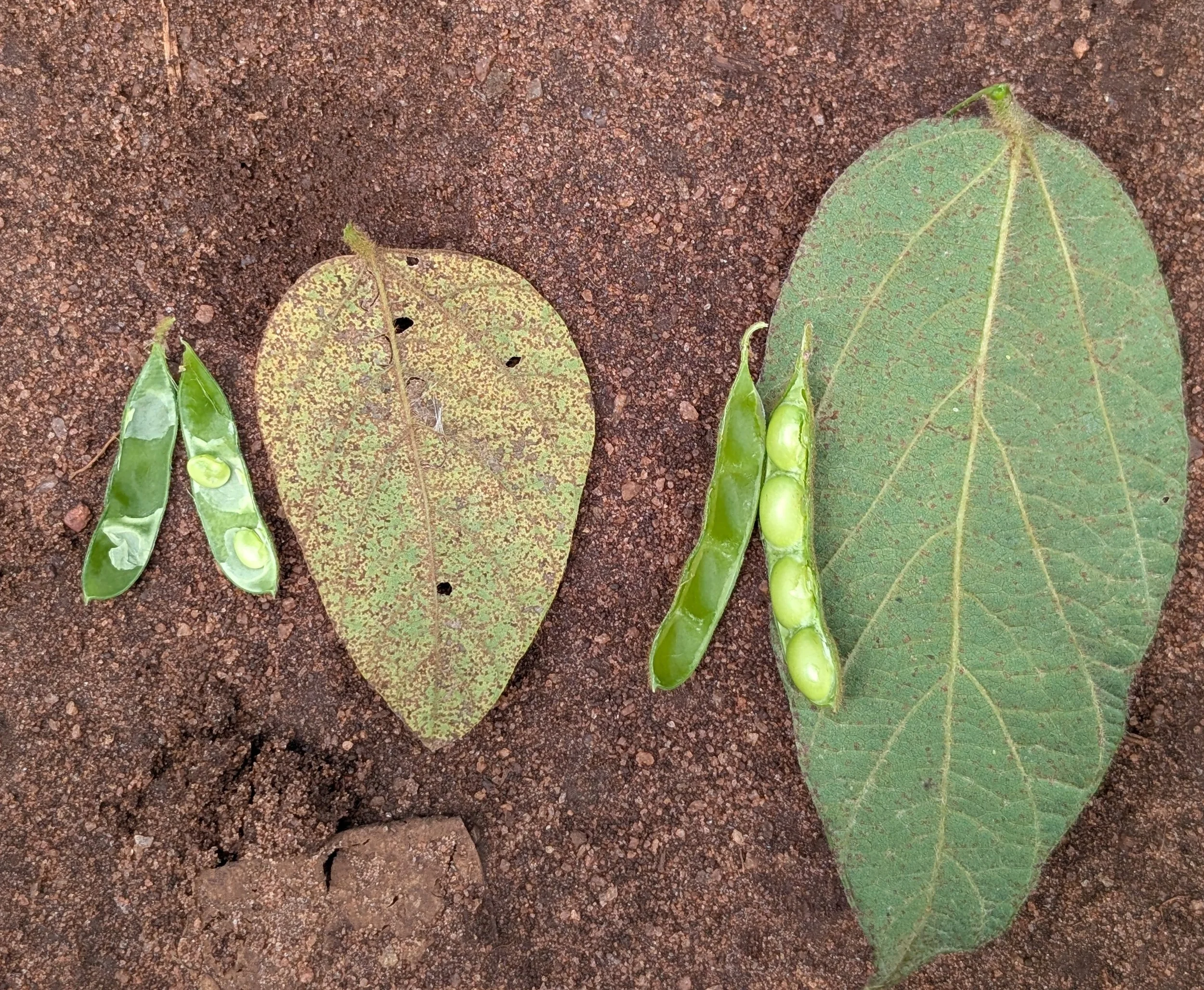
Soybean Rust impacts yield by as much as 80-90%